Vivien Maier
A photographer you probably already know.

There has been so much written about Vivien Maier over the last 15 years and you are probably thinking that another article is not really necessary. I only decided to write an article because I have a personal connection.
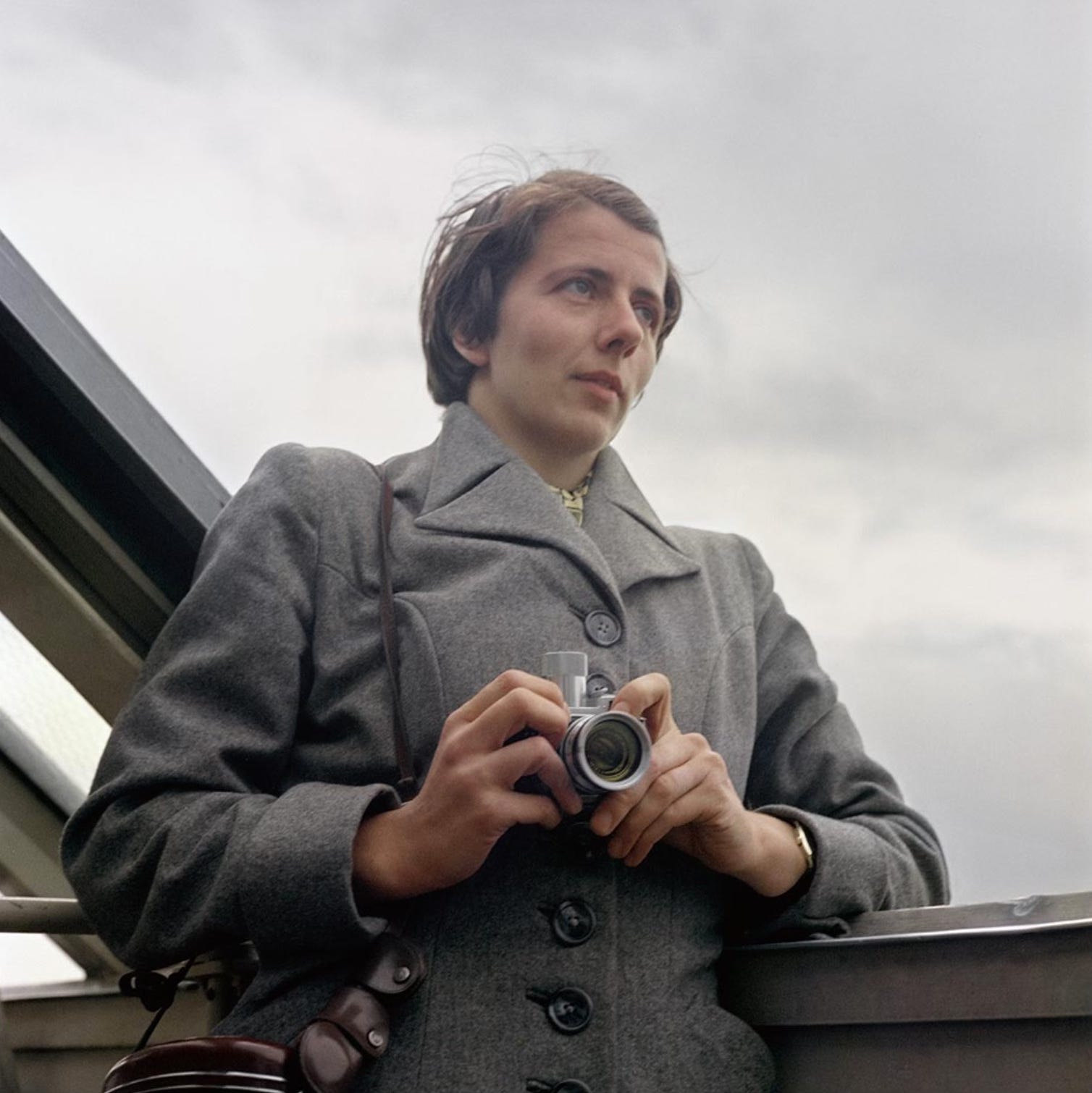
Vivien Maier worked as a nanny, but took photographs along the way, not of her charges, but of everyday life in the city. She photographed mainly in Chicago, New York and Los Angeles and amassed a staggering number of images that were discovered after her death. The vast majority were negatives, but there were hundreds of unprocessed films too. During her lifetime she kept all of her work secret. She was never published or exhibited, though it is probable that she was aware of the exhibitions of other photographers.
In 2007, two years before she died at the age of 83, the unseen contents of a storage locker were auctioned off after Vivien Maier failed to keep up the payments. Three dealers got the contents and discovered this huge collection of images from the 50’s 60’s and 70’s. one of these was a Chicago collector called John Maloof.
John Malloof has become the most prominent name in her story since buying the other parts of her archive from the other two dealers. He has published books on her and has made her story famous.
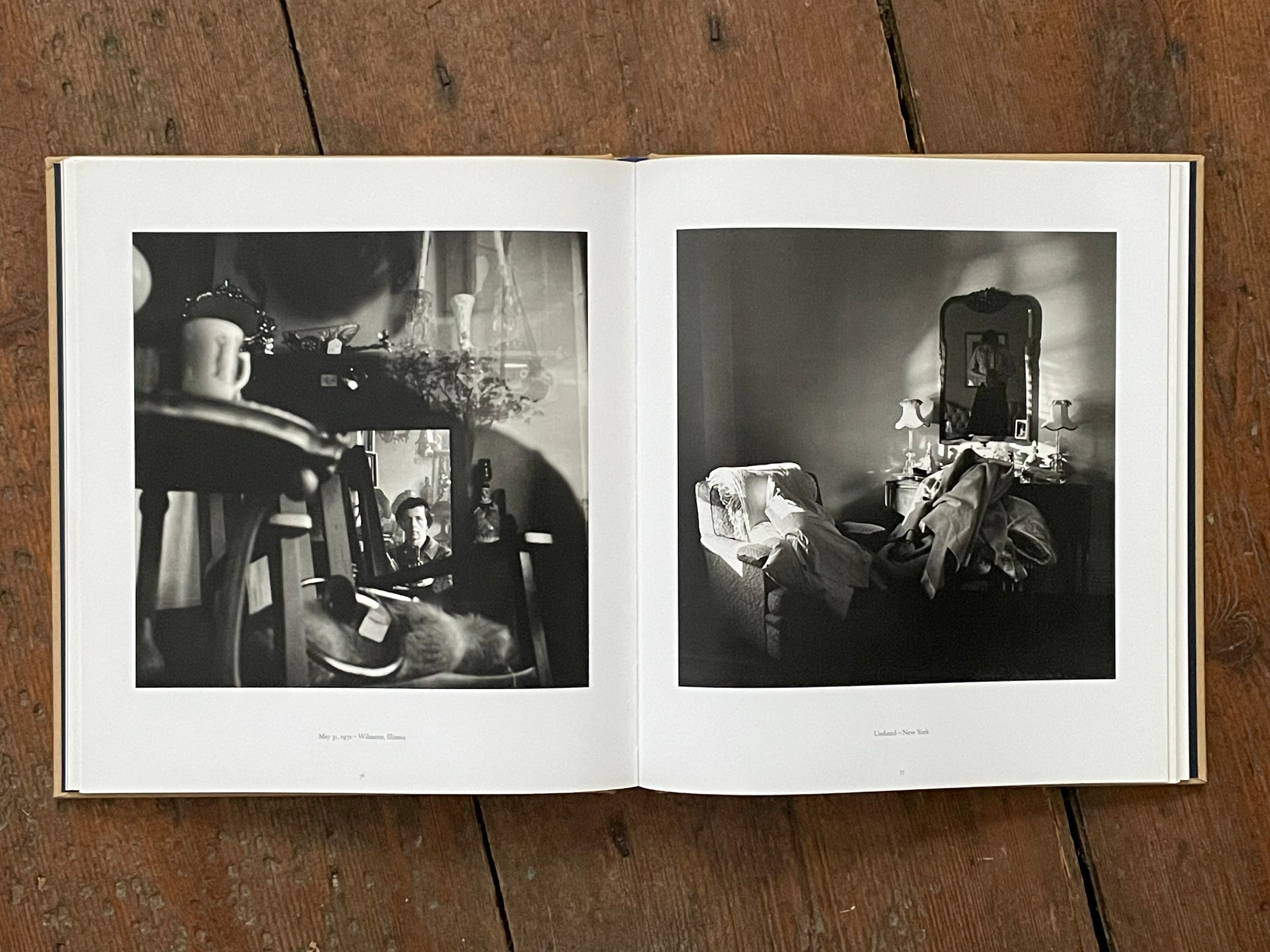
As I say, a lot has been written about her and most people seem more interested in her unusual story than the quality of her work.
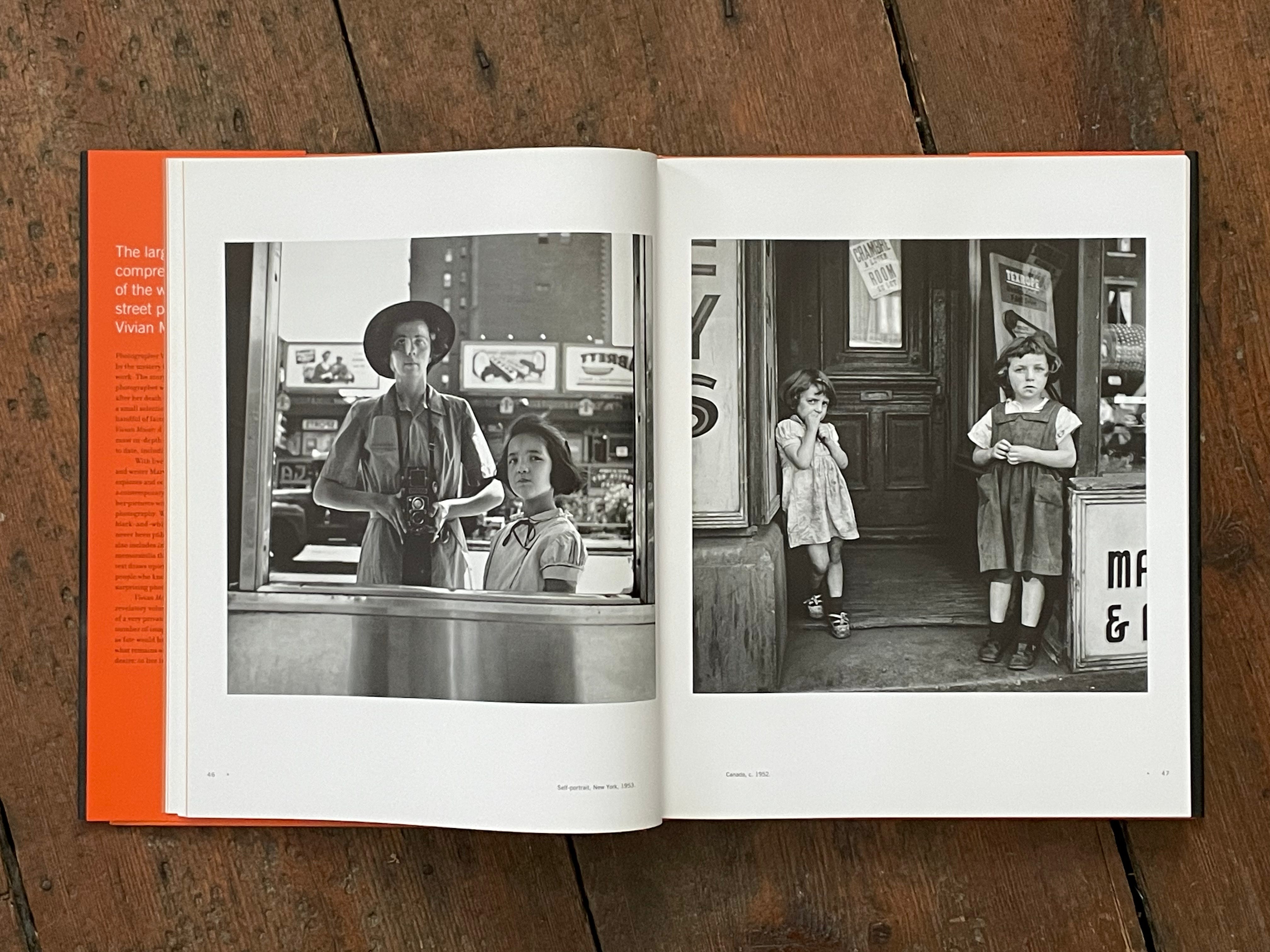
I think she was the real deal, She had the obsessive, collector mentality that is common in many artists. She collected newspaper cuttings, audiotapes, prints, slides, correspondence and home movies. The very fact that she took lots of self portraits is proof that she wanted to produce a great body of work, and to be remembered for it. She is saying: ‘this is me, I did these pictures’.
I think her work is superb and just as when Jimi Hendrix appeared in London in 1966 and effortlessly blew the previous ‘stars’ into the background, she effortlessly outshines many of the names that we are told are the ‘stars’ of the photographic world.
Don’t ask me which ones, make your own mind up. I am not going to list the names of well known photographers who I think are not worthy of their fame.
Before writing this article I did a little online research to refresh my memory of the dates and details, and I noticed that John Maloof has the domain name of vivien maier.com and has written a rather romantic story about his part in the saga:
From the website:
[ After John Maloof purchased his first home in 2005, he began to get more involved in the community where he lived. He delved heavily into historic preservation and eventually became the president of the local historical society on Chicago’s Northwest Side. Given that this part of the city is often ignored, he came to believe that by writing a book on the neighborhood, he could work to promote awareness of its often overlooked charm. It was this decision to co-author the book Portage Park that would change his life forever.
The publisher required approximately 220 high-quality vintage photos of the neighborhood for the book. To gather enough images for this project, John and his co-author, Daniel Pogorzelski, were forced to look everywhere for any old photographs good enough to make the cut. The result was a nearly year-long scavenger hunt where they followed lead after lead to compile the pictures needed for the book. It was during this process that John visited a local auction house, RPN, to see if by chance, they would have any material for the book up for auction. Sure enough, he found a box of negatives depicting Chicago in the 60’s. Unable to get a thorough look at its contents, he took a gamble and purchased the box for around $400.
After he and his co-author looked through the negatives, they found nothing relevant for the project so John put them in a closet until after the book was completed. After some time, he revisited the negatives and started to scan them. The images that caught his attention were historic in nature (he had absolutely no background in photography to know what to look for). John became inspired to pick up his point-and-shoot camera and document the city the way this photographer had. Photography became a new passion and he became a photographer.
If we fast forward about a year later, John’s point-and-shoot camera is a long gone and he’s on the streets with a Rolleiflex, just like Vivian Maier. By that time, he had taken it upon himself to take a crash course on photography to pick up what he could about its history and its masters. John created a darkroom in his attic and set out to learn the process of printing and developing film. Maloof was ashamed to admit this to others at first, but he had become obsessed with Vivian’s work, and made it his mission to re-construct her archive. ]
This is not the complete story. When Maloof acquired this vast collection of negatives he tried to make some money back by selling individual frames on Ebay. I know this, because I know a guy called Phil in Liverpool who had bought about 30 of them.
He had bought them originally to make composite vintage photo greetings cards. he wanted a range of 50’s and 60’s images that he could scan, and join together digitally.
Most of the negatives were in pretty good condition, but about three of them were underdeveloped and had silver lines down them. This was obviously because she used drugstore labs and this particular film (and probably loads of others) had been through an automatic processing unit that was never cleaned and had old chemicals in it. The under development was due to exhausted chemicals and the silver marks were from silver deposits on the roller transport mechanism.
Around this time there was some legal thing going on about whether her work should be exhibited if she couldn’t consent, so the gallery that this guy was going to use, got cold feet and cancelled it.
From Wikipedia: “In June 2014, lawyer and former photographer David C. Deal filed a legal case challenging the rights of current owners of Maier's negatives to commercialise them.”
If you are interested in her story, there is a great documentary film called Finding Vivian Maier.
Also: Who Took Nanny's Pictures (2013) – directed by Jill Nicholls, produced by the BBC.
The Woman in the Mirror (2017) – directed by Ryan Alexander Huang, biographical short film.
Books:
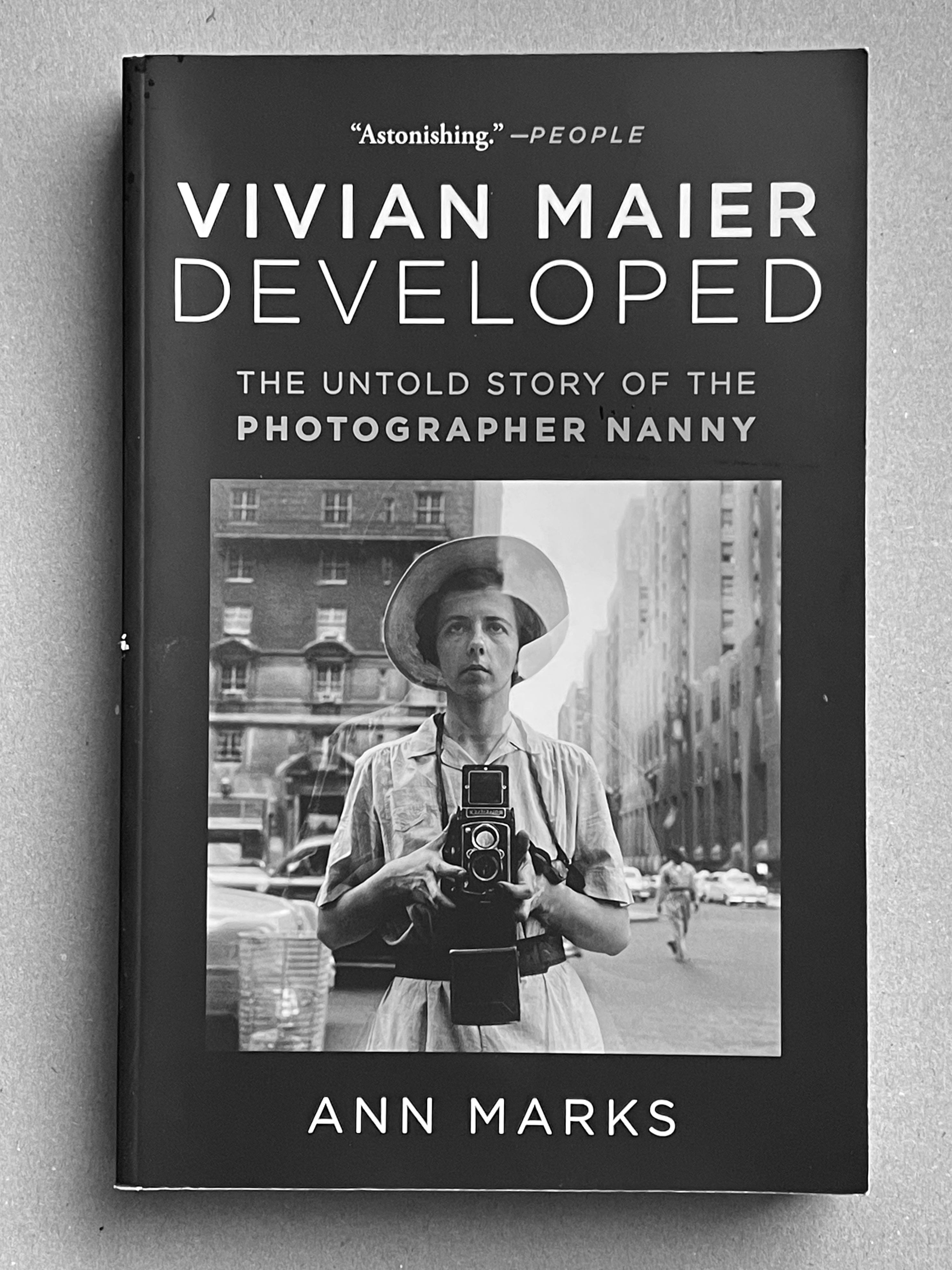
Vivian Maier Developed.
Vivian Maier: Street Photographer.
Vivian Maier: Out of the Shadows.
Vivian Maier: Self-Portraits.
Eye to Eye: Photographs by Vivian Maier.
Vivian Maier: A Photographer Found.
The Color Work. New York City: Harper Design, 2014.
All of these words come out of my head. I never use AI in any form and I never will. I hope you appreciate the time and effort that goes into these articles. Let’s keep real photography and real writing alive.
If you find my articles interesting or useful, please spread the word to anyone you can think of who would be interested.
If you have enjoyed this post and the information here and elsewhere on my Substack and you would like to support me, you can subscribe or just buy me a coffee at Ko-fi.com/andrewsandersonphotography You can send as little as £5.00, or more if you are feeling generous. This money goes towards materials used for the tests and printing for these articles. Alternatively you can be a paid subscriber.
Thank you for reading, please let me know your thoughts.
Andrew Sanderson July 2026.
Other places to see my work;
Instagram; http://instagram.com/andrewsandersonphotography
Original hand made darkroom prints are available from my online shop; www.andrewsandersonphotography.bigcartel.com
I also offer one to one workshops at my darkroom/studio in West Yorkshire, UK. If you are interested please email me at sandyjottings@icloud.com
I loved the documentary about her
Wow. Fascinating story.