Preserving before loss.
A continuation on last weeks theme.

This weeks writing is a follow on from my piece; Time, place and change, 7 April 2025.
I mentioned that I had photographed many other old farmhouses and on a few occasions I did portraits of the occupants shortly before they died, or were evicted.
One such place was the home of Benny, Margaret and Robert. In the picture below, we see Margaret and Robert at home.
I got to know them because I was walking home from my darkroom one evening after dark and I saw this rather old man trying to pull a plank out of a skip. I figured that he couldn’t live too far away, so I offered to help him get it out and to carry it home for him. He took me to an old farmhouse tucked away behind one of the local pubs and I met his sister. I met the other brother Benny some time later and we became friends. Benny let me do some portraits of him for an advertising job I had, and agreed to let me photograph them in the farmhouse at a later date.
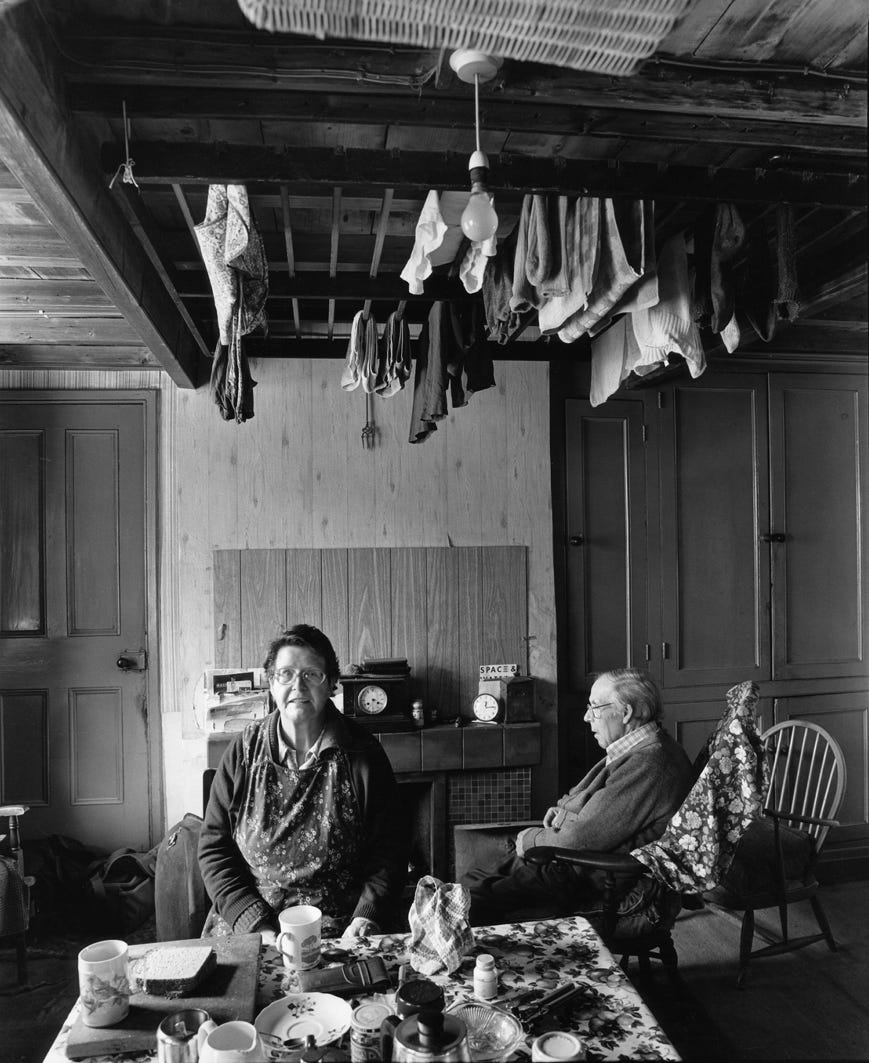
Margaret and Robert.
This is a shot of Benny holding a picture of his grandfather, this would have been around 1993 and he was in his late 70’s I think. A rough estimate would put the grandfathers birth in the last quarter of the 1800’s.
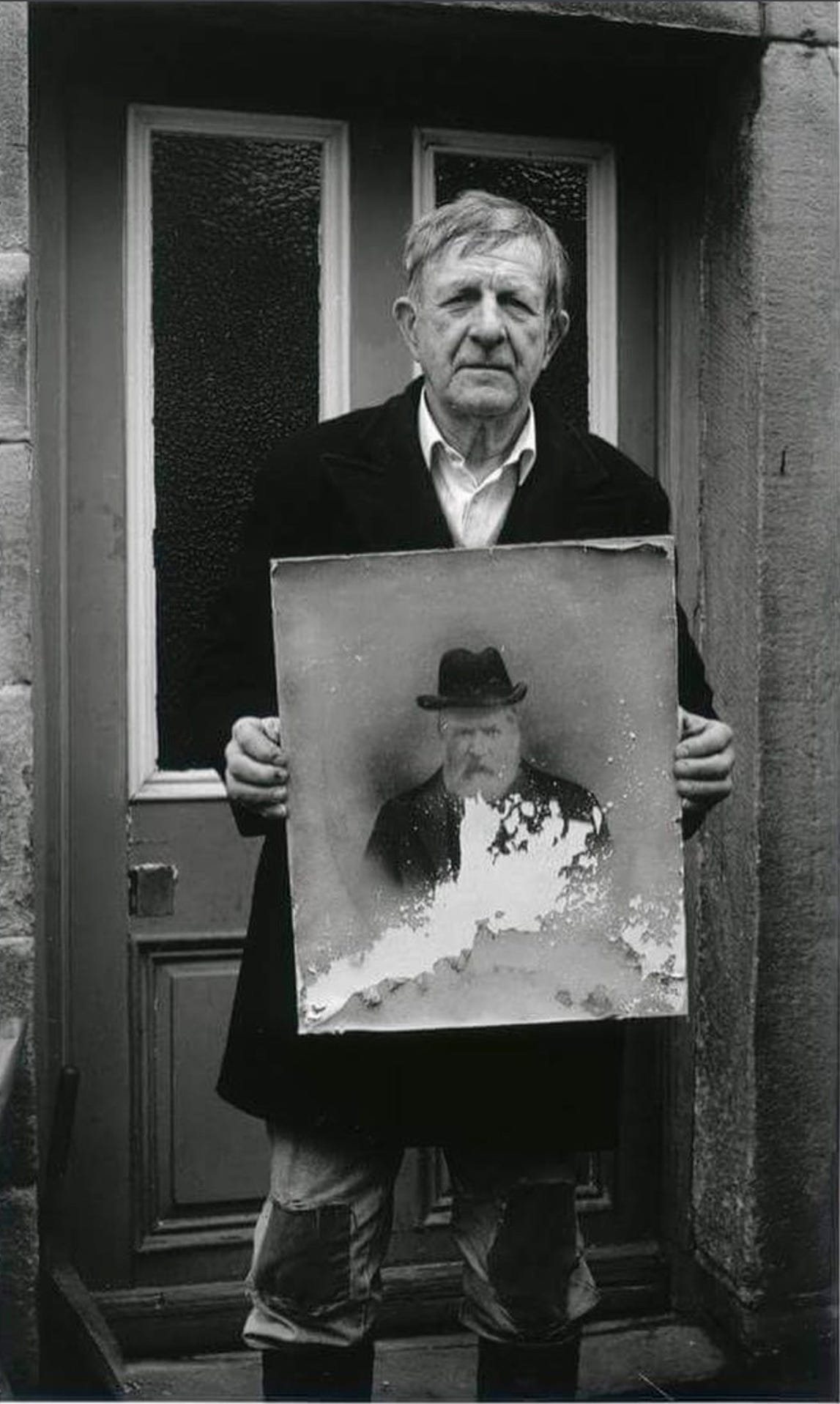
Benny and his grandfather.
When we look at a dilapidated property with its crumbling walls and invasive plants, it is hard to imagine that people had every human experience in these places. Births, family problems, everyday work, friends visiting, marital difficulties, repairs, cooking, money troubles, beautiful spring days, furniture and pictures. Eventually death and abandonment. Bit by bit the evidence of them disappears and the place is just stone and wood.
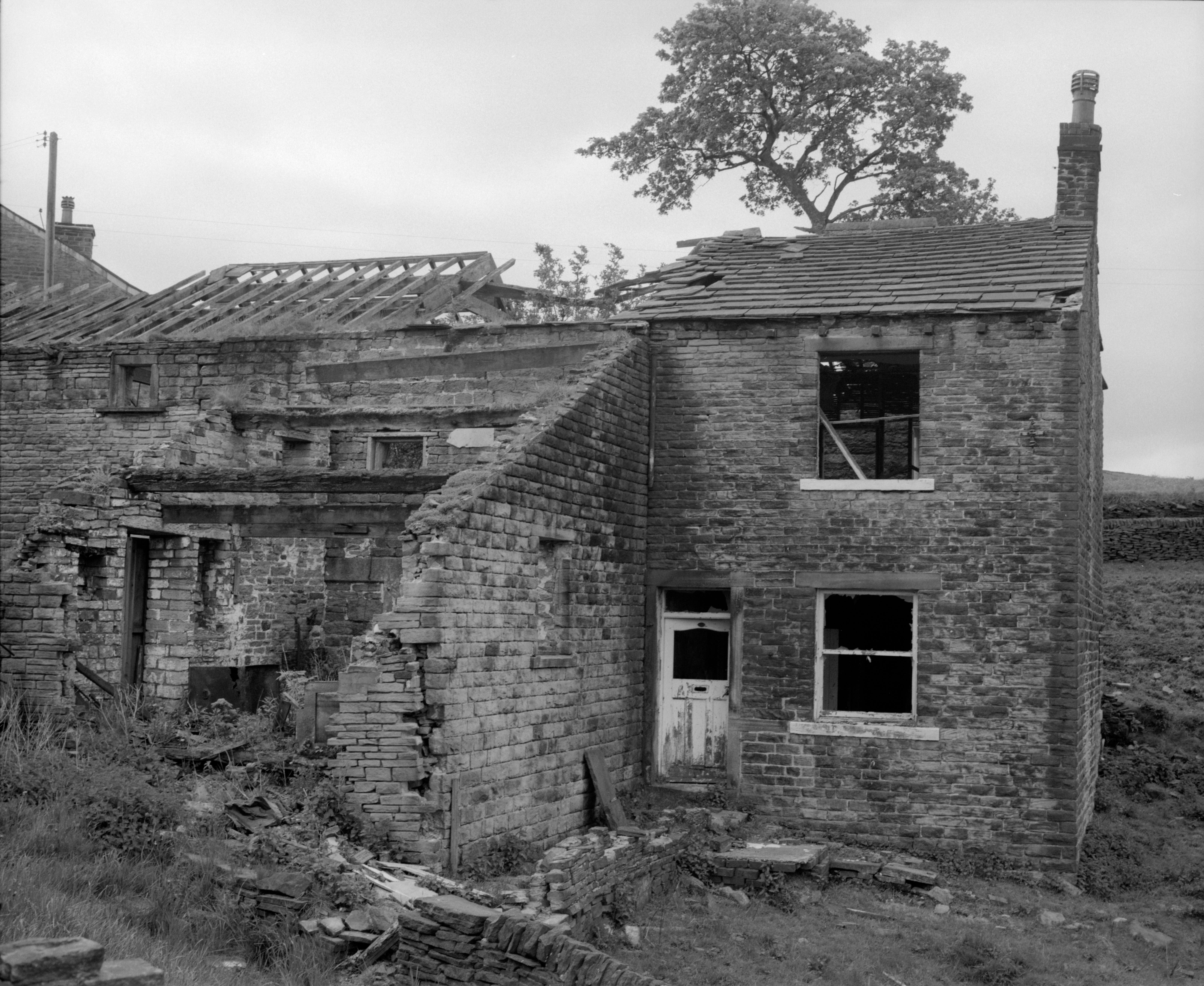
Dunford Road.
Many years ago I wanted to photograph the farms and farmers around where I live, but I was a shy boy and these farmers were hardened, gruff, suspicious and unhelpful, so I concentrated my efforts on photographing empty properties. This was 1978-86 and property developers and gentrification hadn’t found our sleepy valleys yet, so there were quite a few around. Many places looked decayed, unloved and empty, but sometimes there was one small part of the place where the occupant was still living, where the leaking roof and the crumbling walls had not yet made life there impossible. On a couple of occasions I had to make a hasty exit.
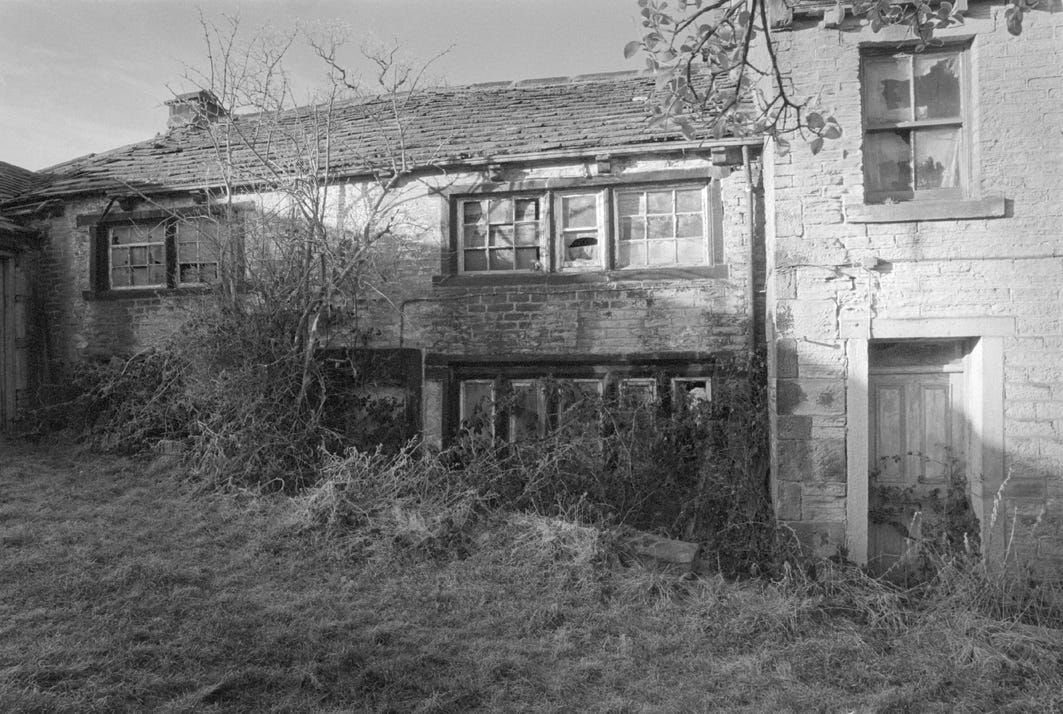
Ward place.
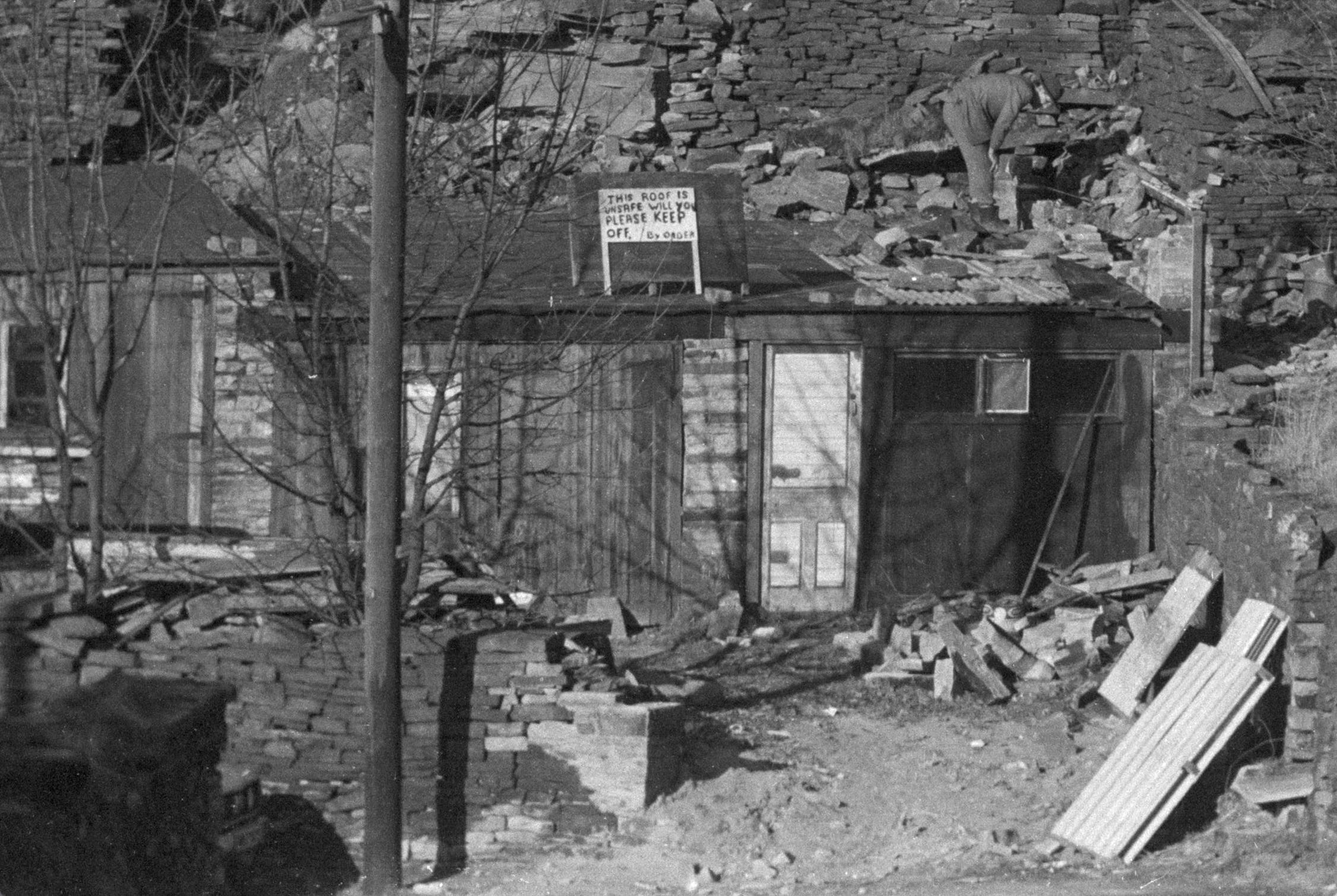
I remember one old chap I used to see around the town who lived in a makeshift shed like construction in a small unused quarry. I only got one picture of the place and now a modern house is situated there. The winters can be pretty harsh in our area and I wonder how he got through the days, the wind must have gone right through the place. In the picture below he is on the roof trying to repair a leaky section with corrugated sheets and big rocks.
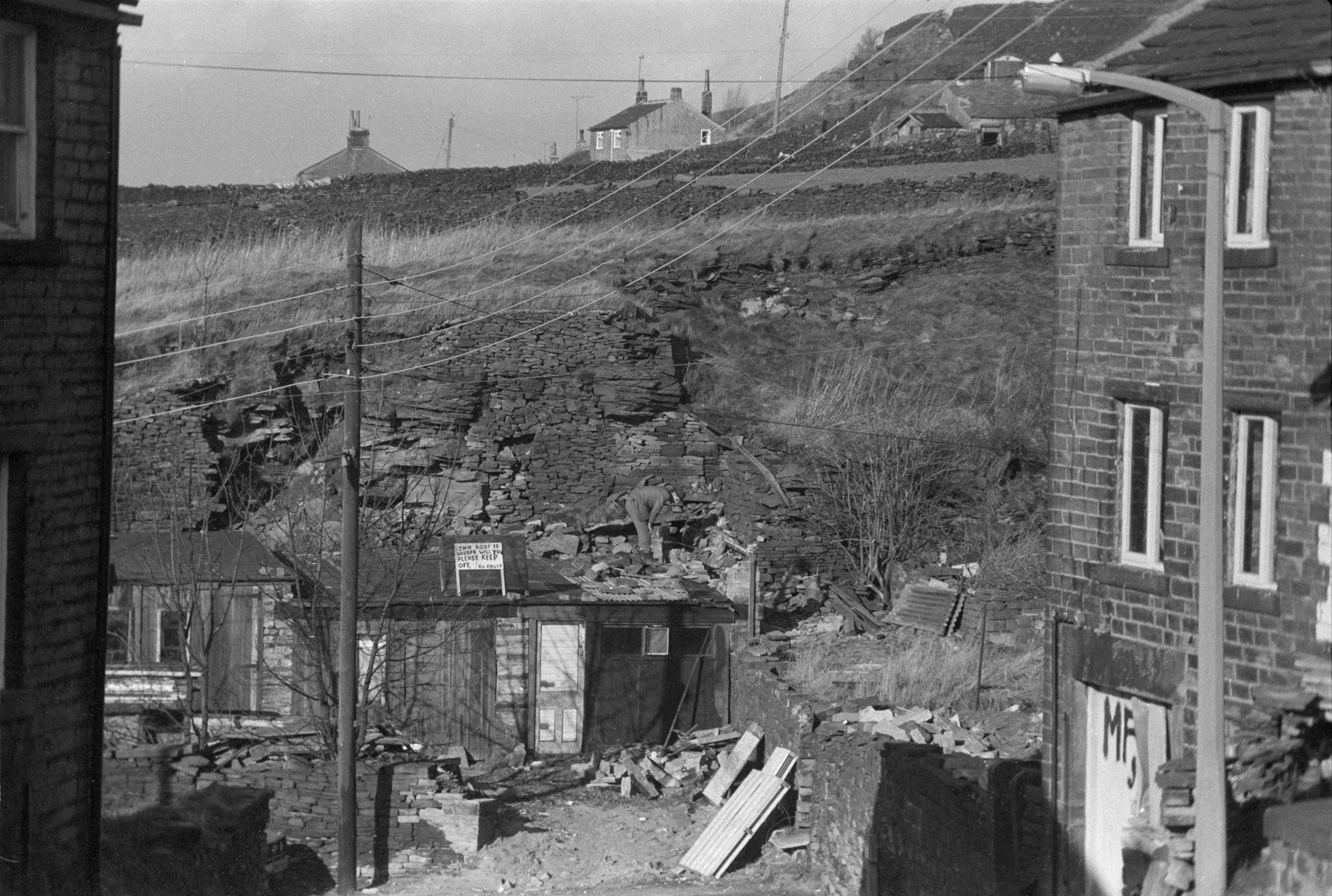
Cinderhills.
Detail;
On a walk one day, I explored an area that I hadn’t been past in over 20 years, it was a big property and obviously very old. There was a man stood in the doorway smoking a pipe and I asked him if I could do his portrait and he agreed. I also asked him if I could come back some time and photograph him in his house and he was perfectly fine about it, but told me I needed to be quick as he was being evicted in a week. I went back a couple of days later. I found it fascinating.
Franks house was the small part under the third chimney in this picture.
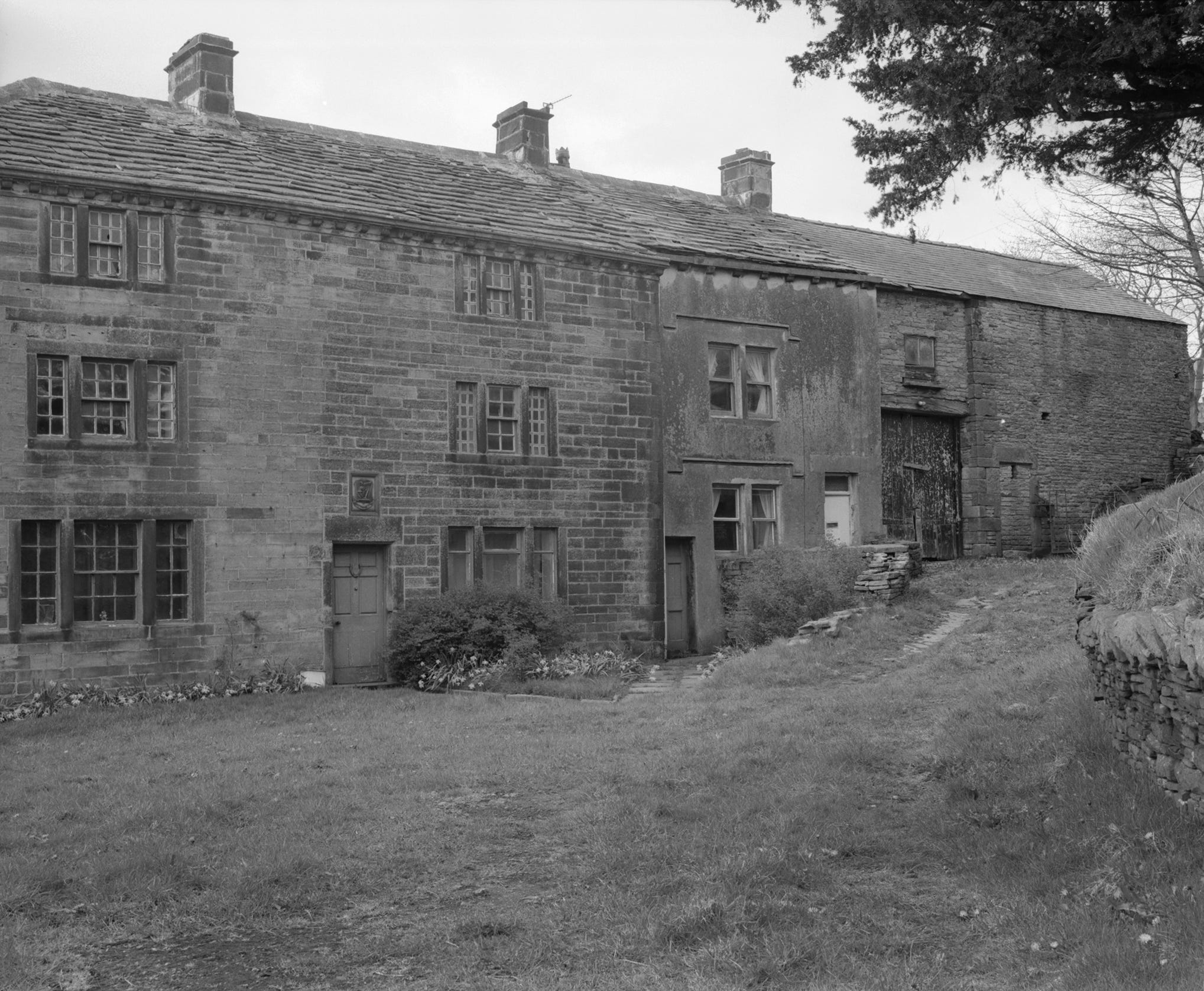
Austonley.
Frank had his bed in the living room and a run down kitchen behind. The reason for the eviction was because the big house had been sold to a developer who renovated it, split it into different flats and made a lot of money. Poor old Frank was moved to a depressing flat built in the 70’s and told that dogs were not allowed, so he didn’t even have the company of his only friend. I visited him there and he was very unhappy, he didn’t live much longer after that.
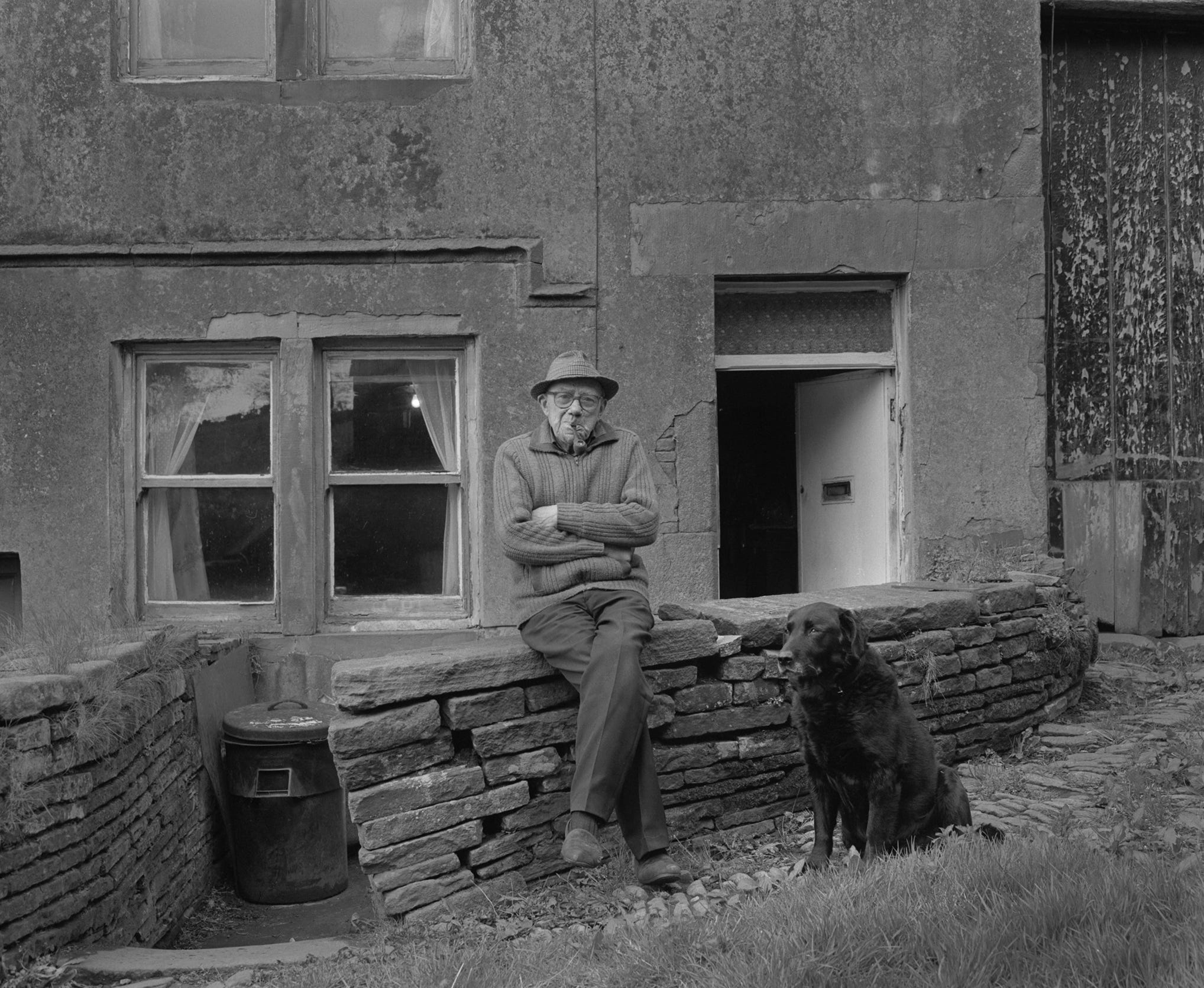
I occasionally look through old negative files and find shots that I can’t locate, after a moments study I realise where it is and the immediate sense is one of loss, so much has changed or gone in the last 40 years.
I did manage to photograph quite a few of these places, but my shyness prevented me from photographing the working farms, many of which were in a sad state. I really wish I had more of these historical shots. I also wish I had recorded these people and asked them about their lives.
Of course I have no problem about approaching people these days, but it’s too late for many, many really interesting properties and local characters. I have begun a project (if you can call it that), where I invite well known locals into the studio for a quick portrait. I am only doing it sporadically, but it has been interesting so far.
If you have enjoyed this post and the information here and elsewhere on my Substack and you would like to support me, you can subscribe or just buy me a coffee at Ko-fi.com/andrewsandersonphotography You can send as little as £3.00, or more if you are feeling generous. This money goes towards materials used for the tests and printing for these articles. Alternatively you can subscribe.
Thank you for reading, please let me know your thoughts.
Andrew Sanderson April 2025.
This is terrific. I really like how you tell the story and illustrate it. The image of Margaret and Robert is exceptional. The en face and profile work so well together in the surroundings with the drying rack above is lovely!
Great stories full of local colour complements the fine photos