Family.
I'm glad I photographed my kids.

I have been photographing my children since our first child Alice was born in 1994. Three years later Will came along followed two years after that by Lily. All of them have been photographed almost constantly since their arrival and have always been perfectly comfortable with having a camera pointed at them.
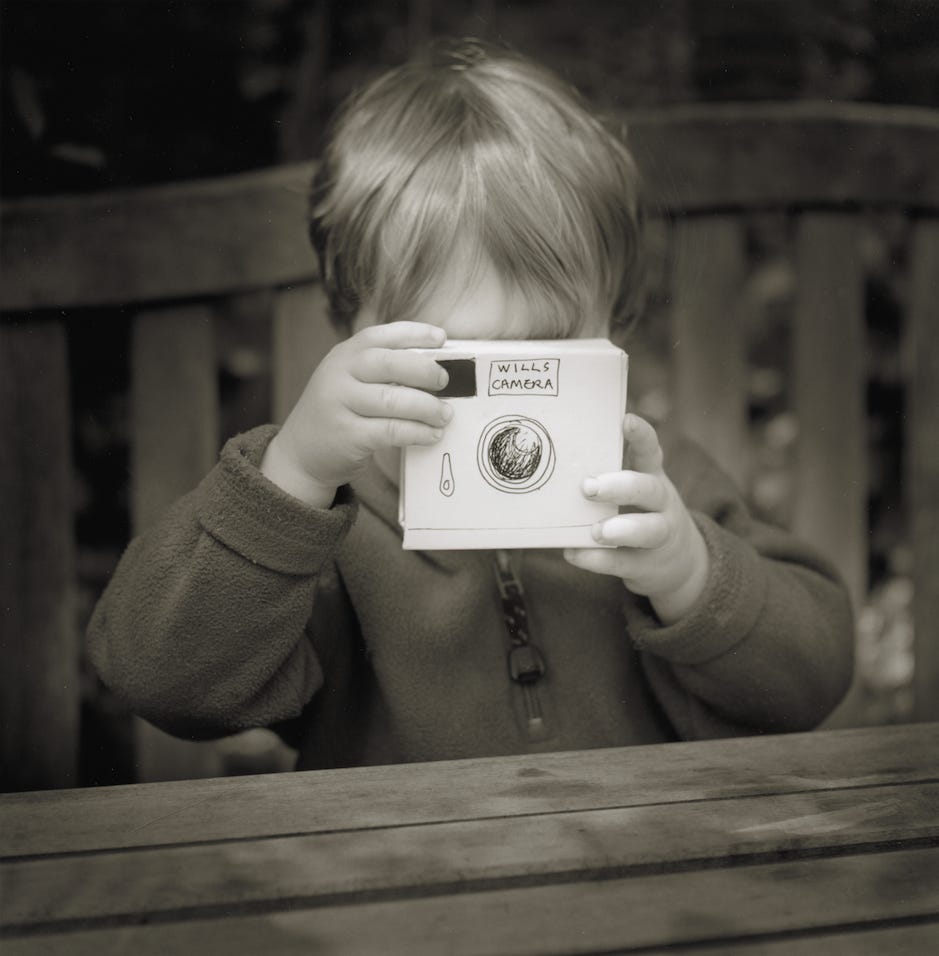
Will’s camera.
Most people use their cameras for events such as Christmas, birthdays, holidays, the school play, etc. and those areas are usually well covered. I wanted to catch moments that covered the way they played and behaved day to day. My motivation was always to create an archive of pictures which would not only record their progress and growth, but would also rise above the ordinary snapshot. I wasn’t making pictures to remind myself of things that were passing, but as an archive for them as adults.
I wanted to introduce a little magic into the family snaps and to leave something that would stand on its own.
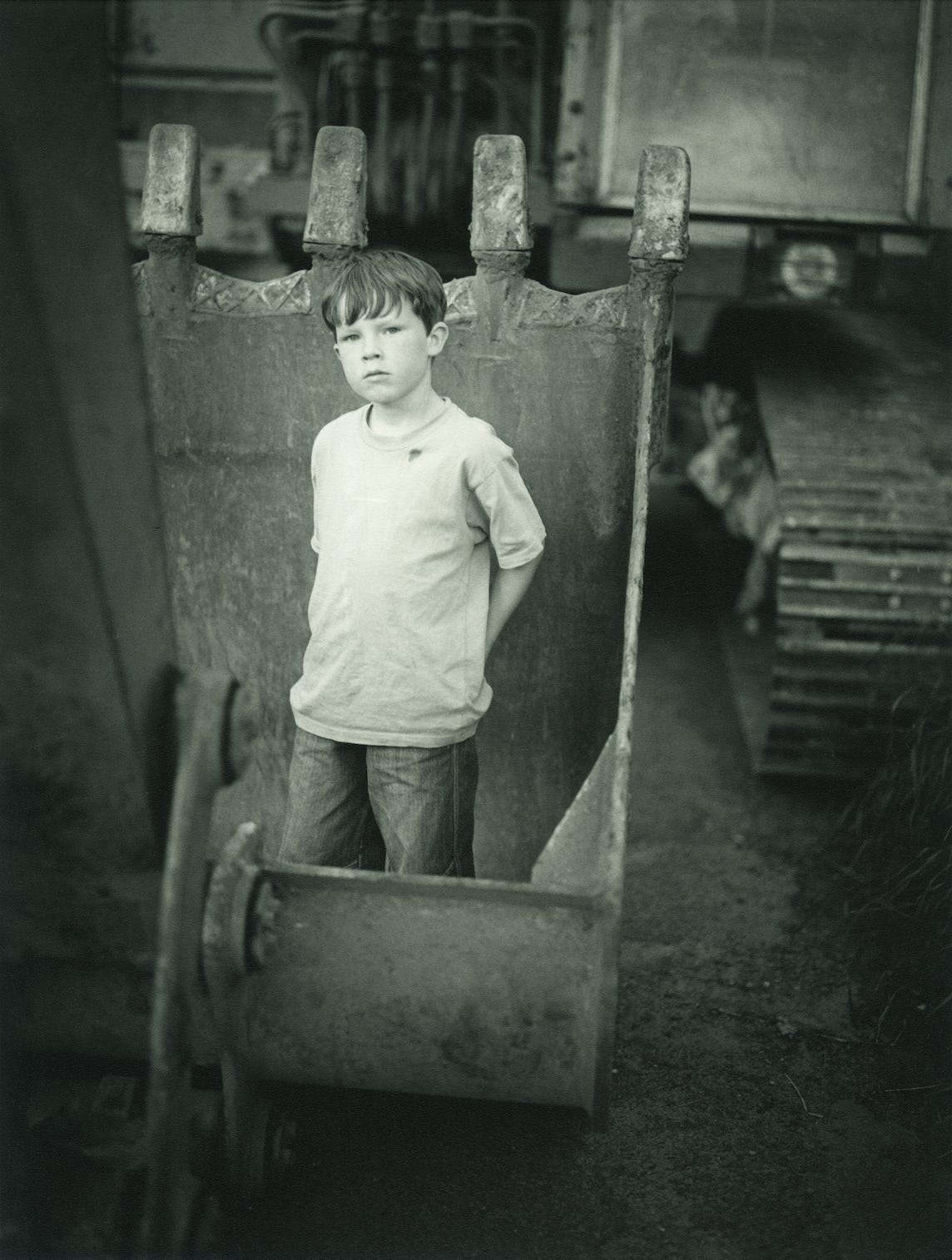
Digger.
It was still important for me to document every family event, and I made sure I did that, though I believe that there is a strange inversion that happens with photography over time; Photographs of special events take on an ordinary dullness and pictures of the everyday become special, so I tried to observe the in between times too.
My approach.
I shot families once in a while as a commission, but I photographed my kids every day. I tried not to pose them if possible, preferring to look for things that they did naturally, or just observing when various elements of a scene come together and suggested a picture. Sometimes posing was necessary, such as when shooting on large format, but this was really not much more than the usual approach, with me asking them to hold it for a longer period of time.
Occasionally I had a particular shot in my head and needed to press gang a family member into sitting, but I always tried to get them to see it as fun. I really didn’t want to order them about, or make them feel pressured. If there was any reluctance, I left it for another day. It doesn’t take many bad posing experiences to turn a kid off for life so I never pushed it, my philosophy was that the shot can wait, the child’s experience was the most important thing.
I never used flash, always available light. Using a range of films allowed me the freedom to shoot in a variety of lighting situations.
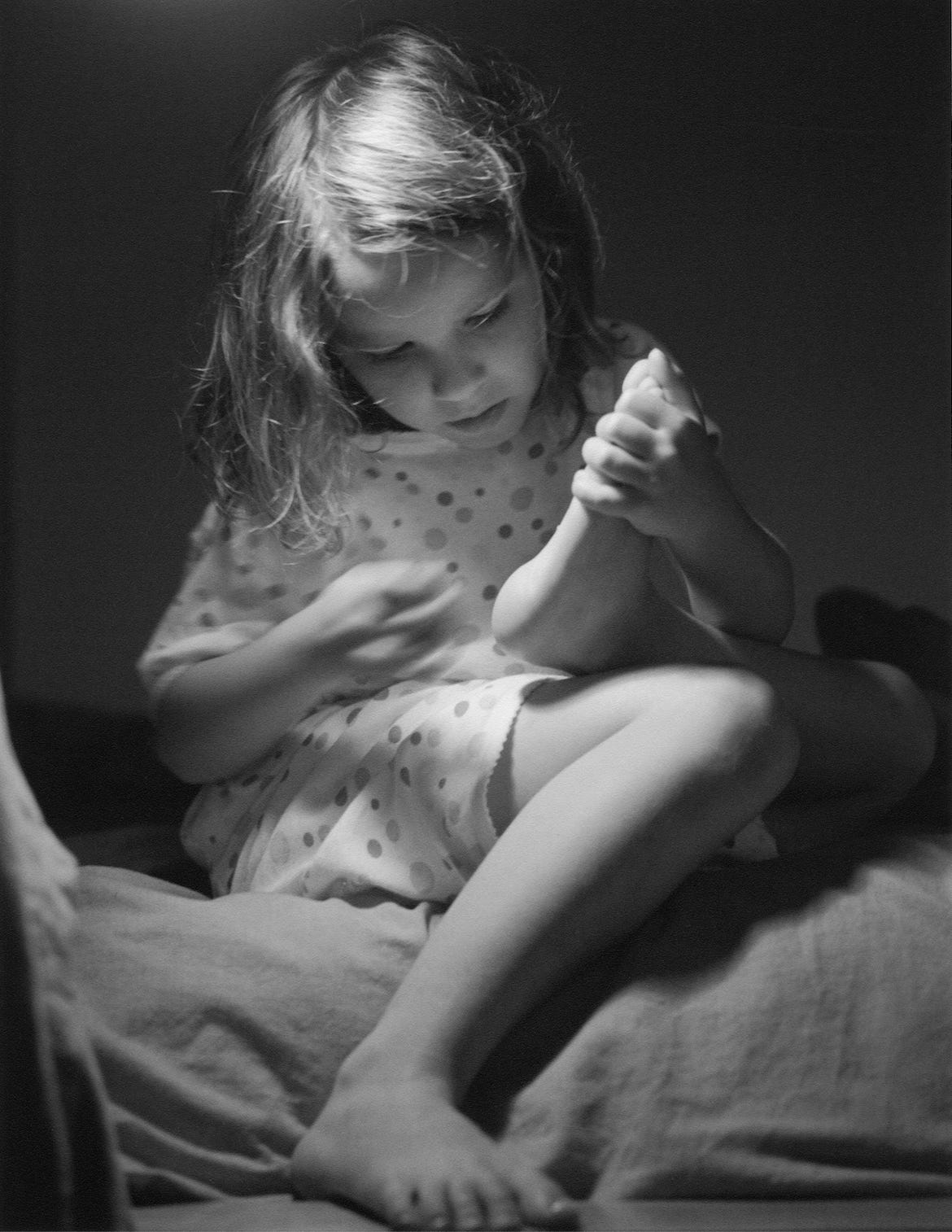
Removing a splinter.
Cameras.
I shot on all formats, from half frame right through to 10x8 (and occasionally digital), but I suppose medium format was the most used.
For years I only had a battered old Mamiya RB67 and a Yashicamat, both with waist level viewfinders. For those of you unfamiliar with these cameras, you look down into the viewfinder and see a reversed image on the focussing screen, so if you are chasing a kid round the room and (s)he disappears out of the left of the frame, you have to move to the right!
One of the great things about medium format negs such as 6x6cm, is that the quality is so good that you can crop the negative at the printing stage without a noticeable loss in detail, or an increase in grain. A shot can easily be missed if you are turning the camera around or worrying about the composition, so I eliminate this by using a large square negative and cropping later.
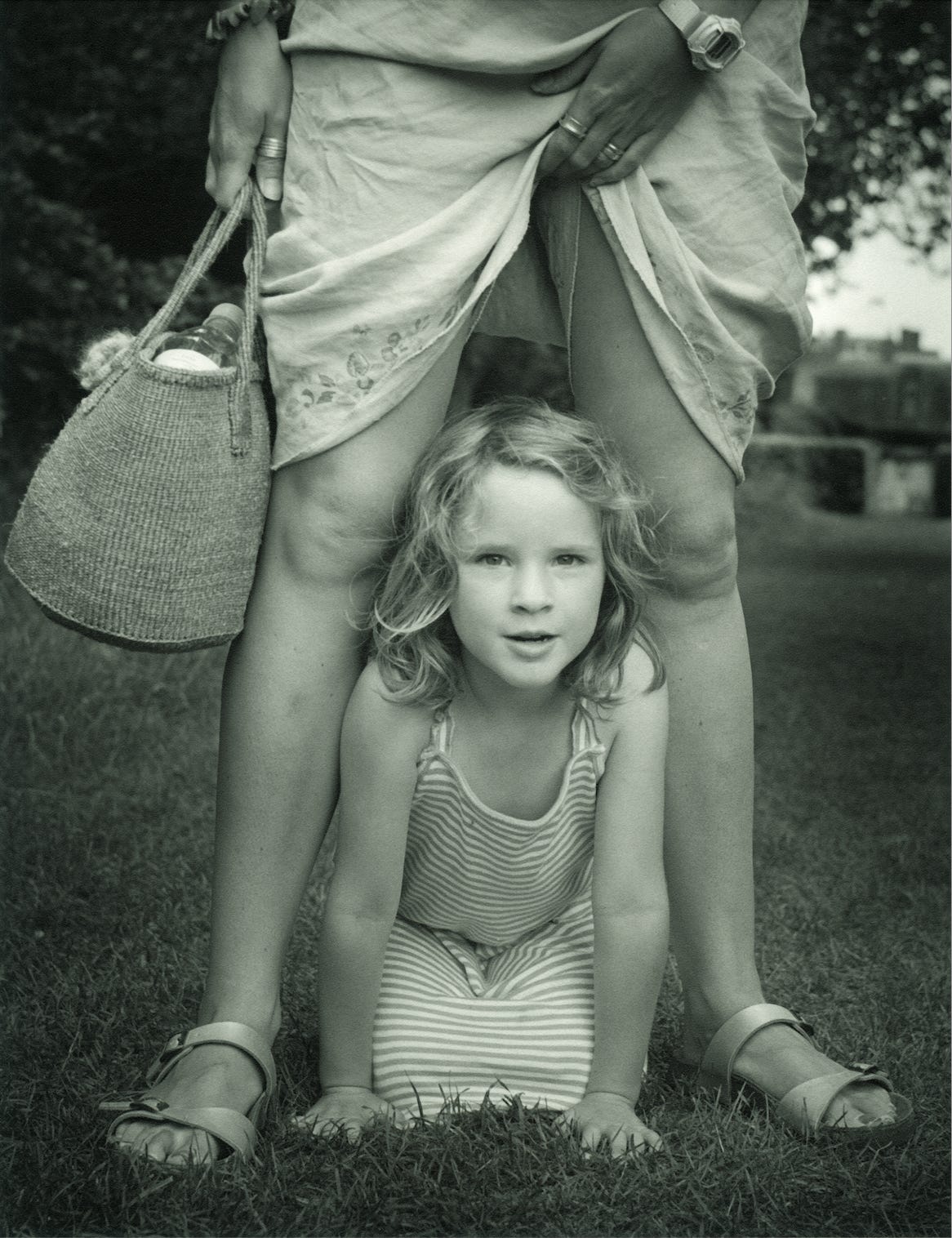
Lily at the campsite.
The slowness and weight of medium format combined with the limited number of frames, might make this type of camera seem less than ideal to many photographers, but the look that this method gives far outweighs the disadvantages.
The inherent quality of a nicely printed black and white fibre based print from a negative of this size, makes a simple situation into a thing of beauty. All I need to do is point the medium format camera at the kids, do a half decent FB print and I have something special. Using medium format (most of the time) means that the negatives are simple to print, have a lovely tonality and can be packed with detail if needed.
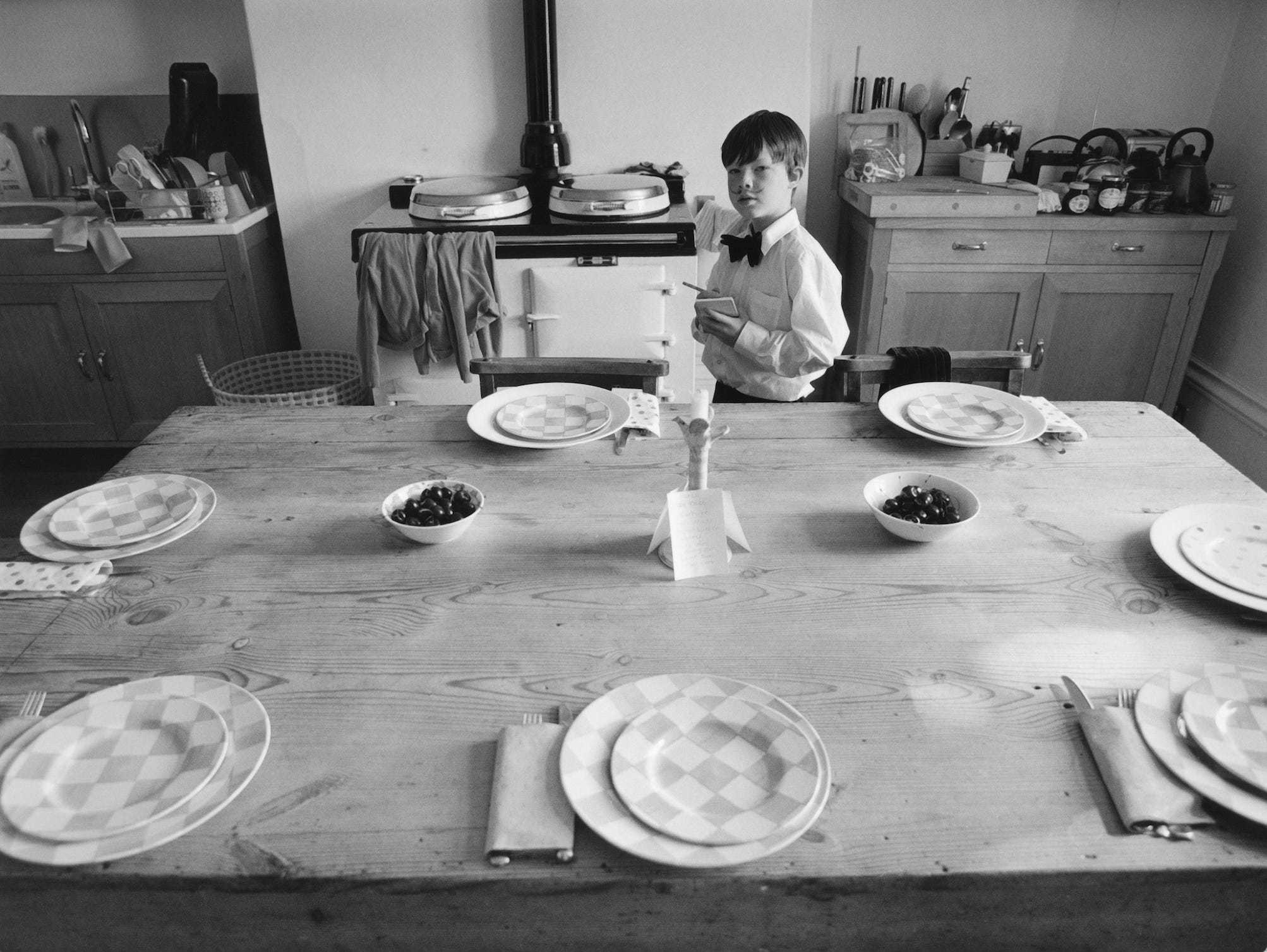
Waiter.
Many times I prefer to shoot at wide apertures to bring the subject out from the background or to draw attention to the eyes. I don’t think it is always necessary to have everything sharp from foreground to infinity, especially for a portrait.
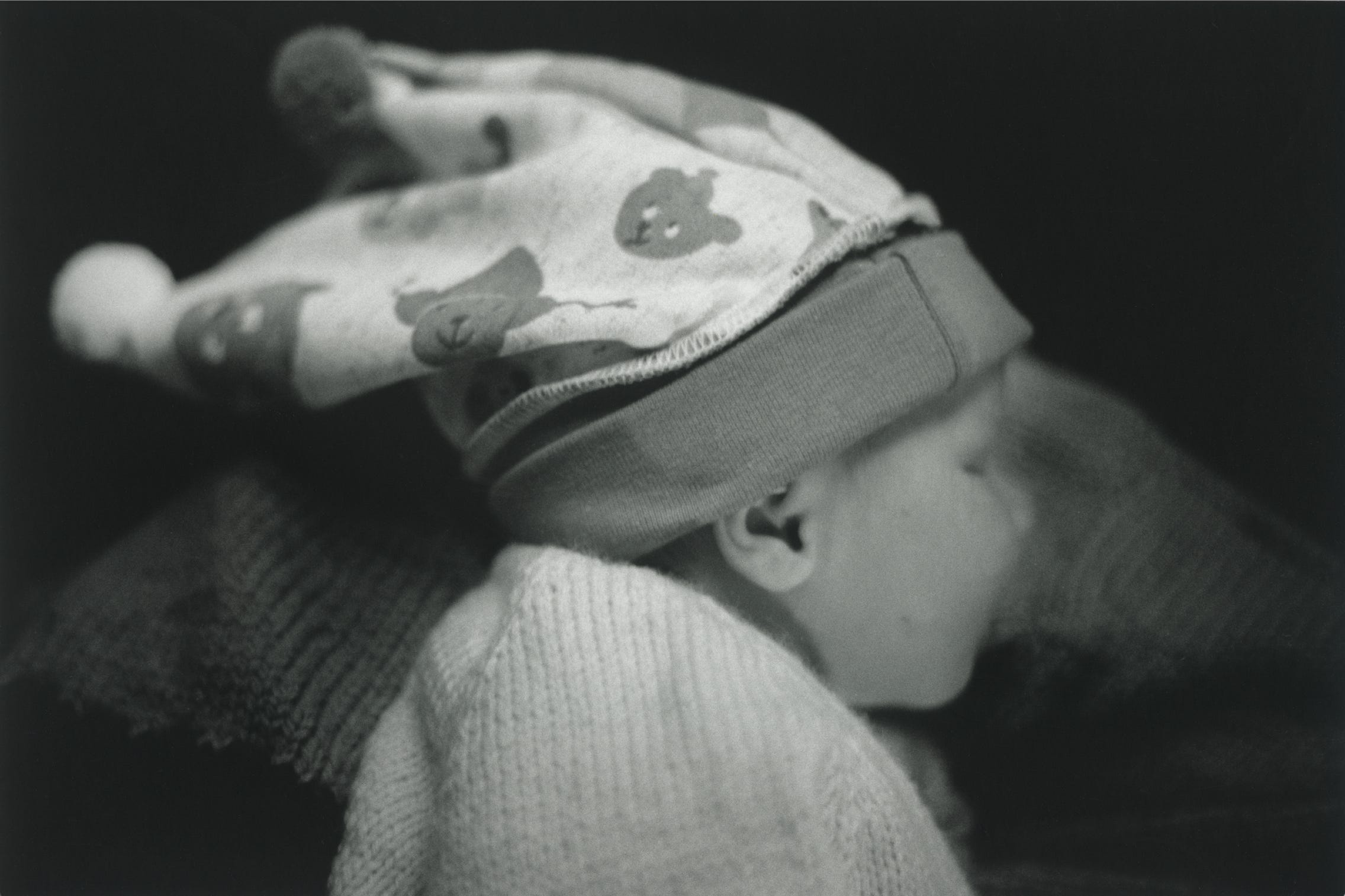
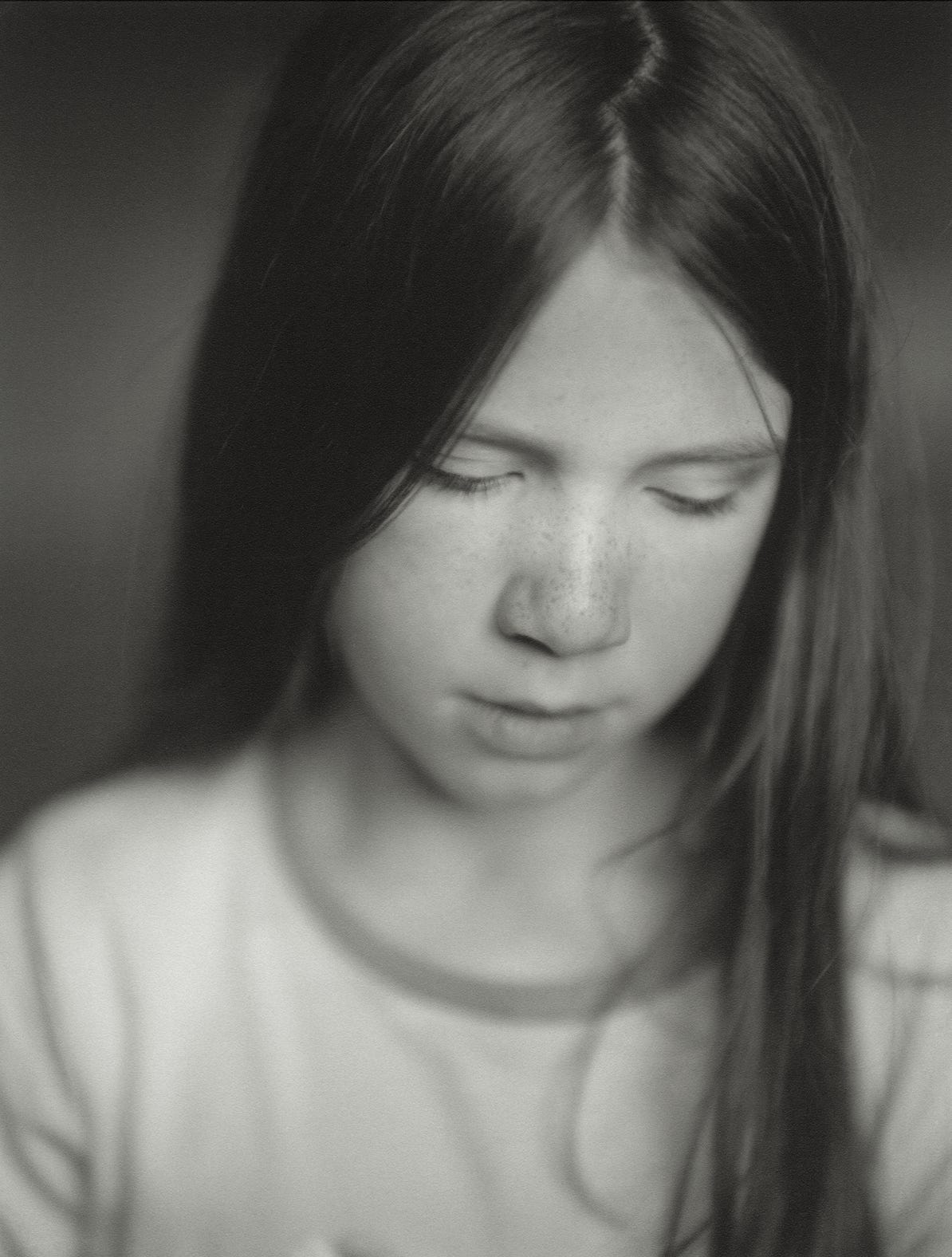
I prefer shooting by natural light, so this gives me the convenience of working with fast (ish) shutter speeds and wide apertures most of the time, but the focus needs to be bang-on. With subjects that rarely keep still, this is tricky. The following shot is not sharp, but it is still one of my favourites of Alice.
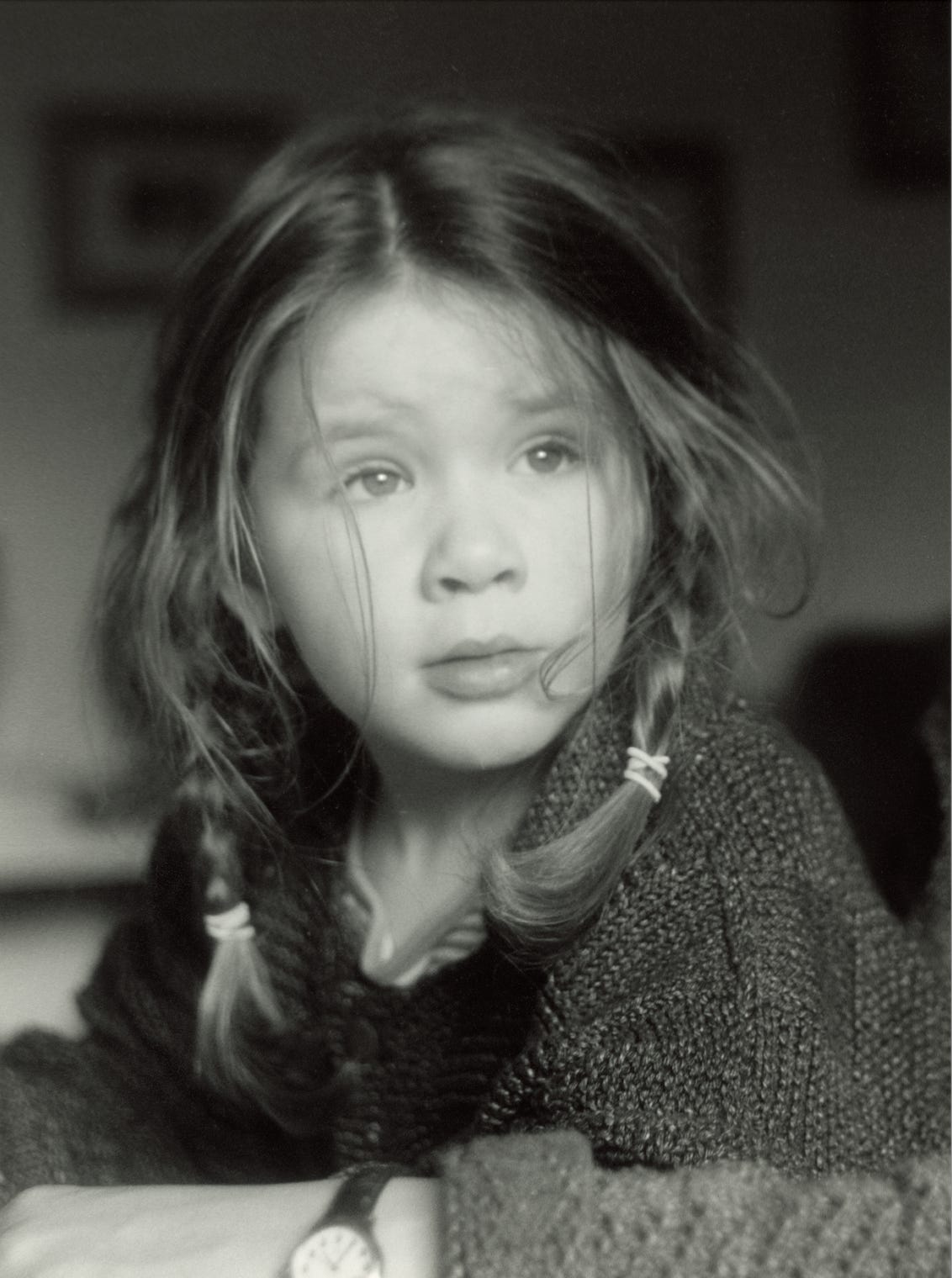
Looking out of the window.
THE PRINTS
All of the negatives I have printed up (and there are many, many more which are not) are at 10x8 inches in size. Personally, I love this size; they look big enough to step in to, but don’t take up lots of space. I didn’t like the common, 4x3 inch colour enprints; they were often badly printed, too fiddly and small.
Very large prints would be lovely, but impractical. We already have a big drawer packed full of 10x8 boxes, the same number of 20x16 or 20x24 prints would take over the house!
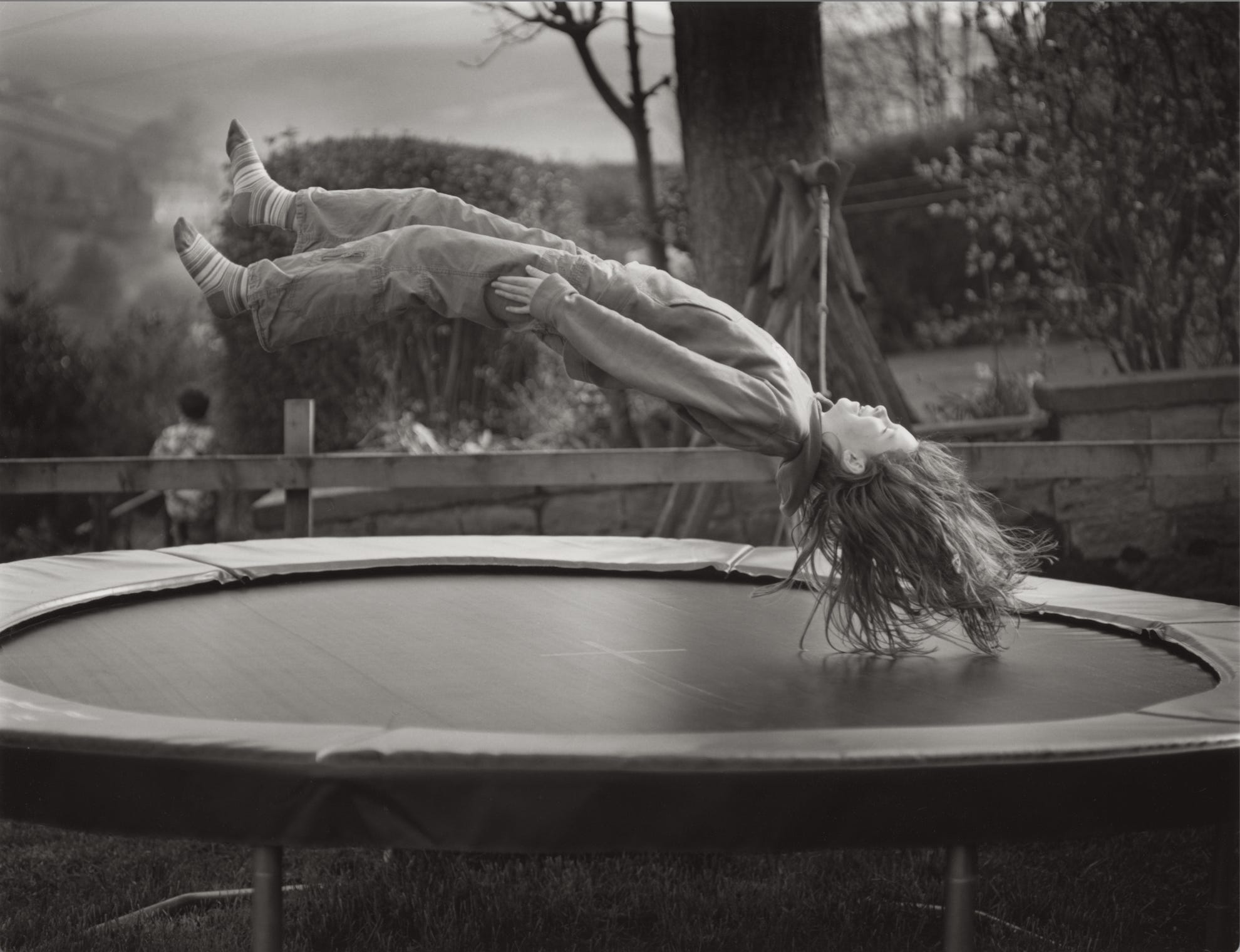
Trampoline.
I have no idea what my family think of this archive; I’ve never asked them. I expect my kids think that this is normal and nothing special. Although they are OK about being photographed, they don’t express much interest in the prints. When they are older and arguing about my estate, they may attach more importance to them.
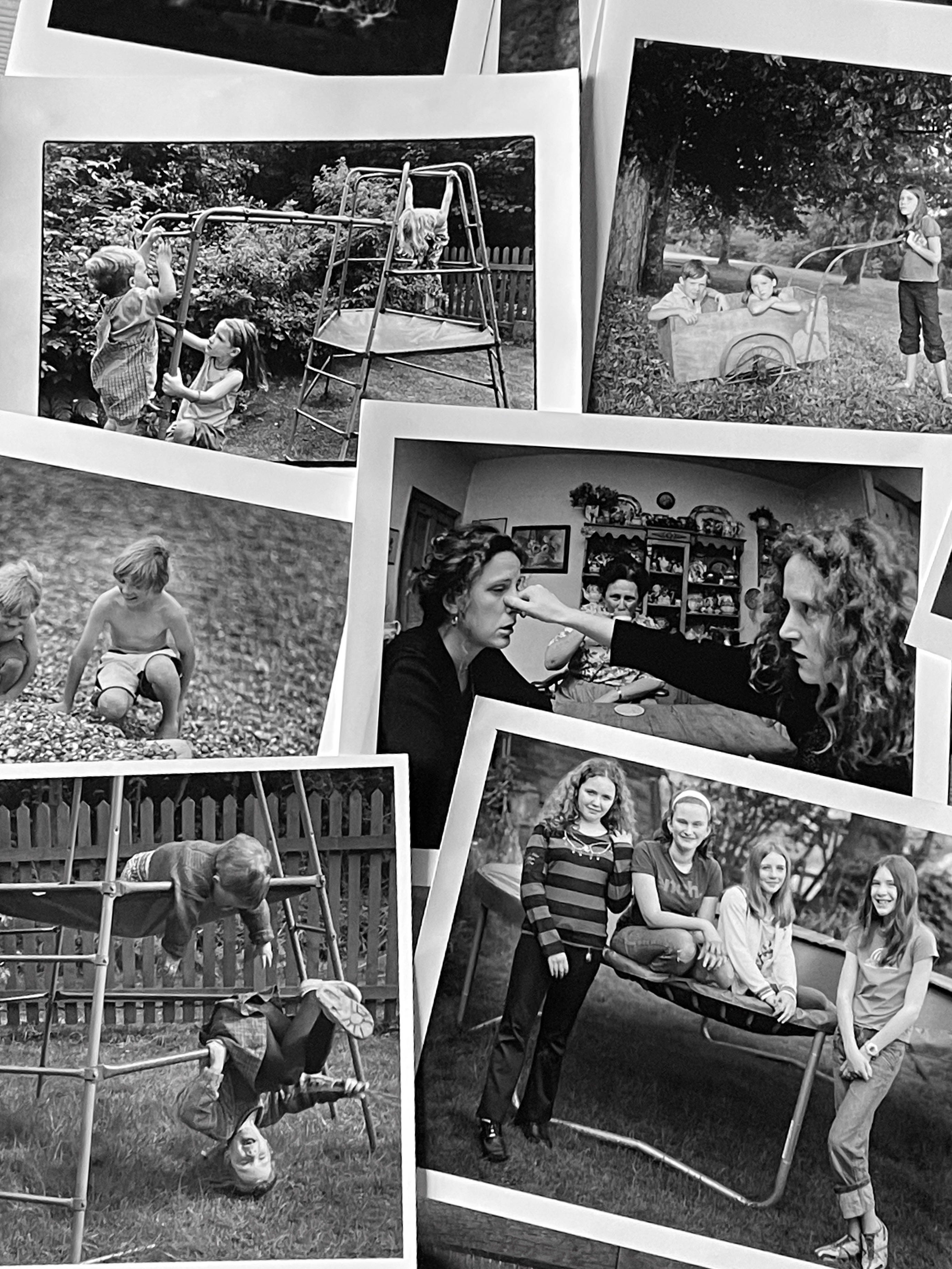
I often photographed other people’s children when they came to play and gave a copy of the print to the parents at a later date. Because this was so different from the prints they were used to, the mums and dads always loved a nicely printed black and white and I got some very complimentary remarks.
FILM CHOICE
Printing to 10x8 from a medium format negative means virtually invisible grain, even with fast films. In summer I used a medium speed film, less sunny days got HP5 and in winter I shot on Ilford Delta 3200, but I rated it at 1600 ISO. (I give it nine and half minutes in ID11 at 20ºC. This gives results almost as good as HP5 and at 10x8 I would challenge anyone to tell the difference).
DIGITAL
I had a little Canon Powershot A640 for a while which I had been given, but I was always disappointed with the results when shooting kids. The delay between pressing and firing meant many missed moments, closed eyes and bad expressions. Also the quality was very poor and all of the shots were lost forever when my laptop fell off the table.
Since I photographed my family growing up on film, digital has totally taken over. People look at me oddly because I still shoot film, but I can knock my negative file off the table and the images will still be there. I know most people shoot lots of phone stuff but don’t print their pictures out, they keep the files on the computer, or on iCloud, though I have heard that some people have experienced files being deleted or missing. If you are seriously documenting your children’s childhood, you need a more secure method of storage.
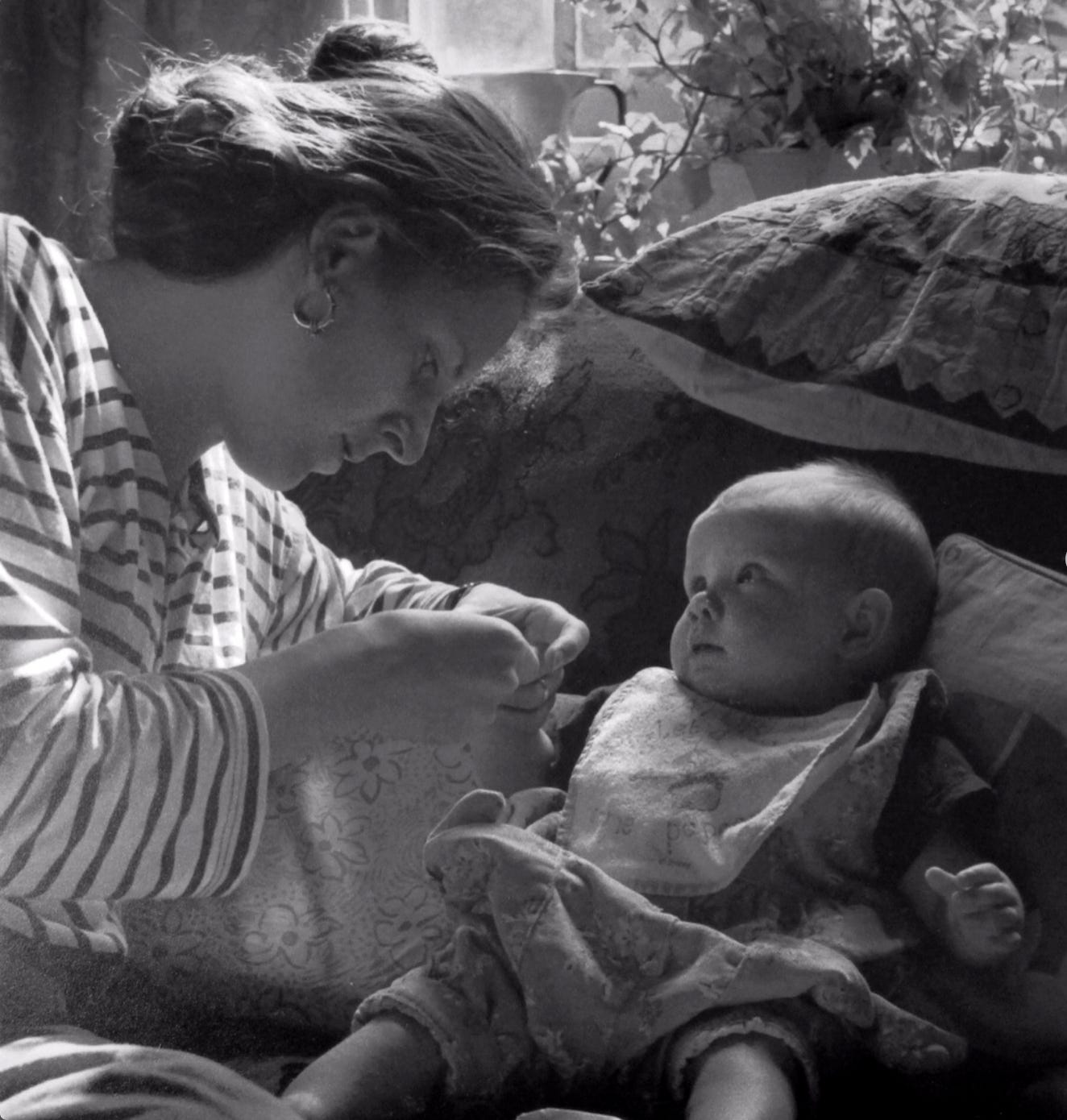
Trimming fingernails.
What is going to happen to these images in 50 or 100 years? Assuming that the media is still readable by then, is anyone going to trawl through hundreds of files, some hidden inside other files looking for things of interest? When your grandchildren are clearing your effects the computer will go in the skip, no one is going to spend hours looking through all your files to find your images. Worse still, if you don’t have any immediate family, do you think that your computer is going to turn up on a car boot sale, only to be bought by some nerd? Will they look through everything? Will they care? Chances are, if your stuff isn’t printed, it’s likely that it’s not going to contribute to social history.
Whichever medium you work in, I believe you should print out at the very least the best ones, and if you can, also the ones which will take your children back to events which were important to them, -not just to you.
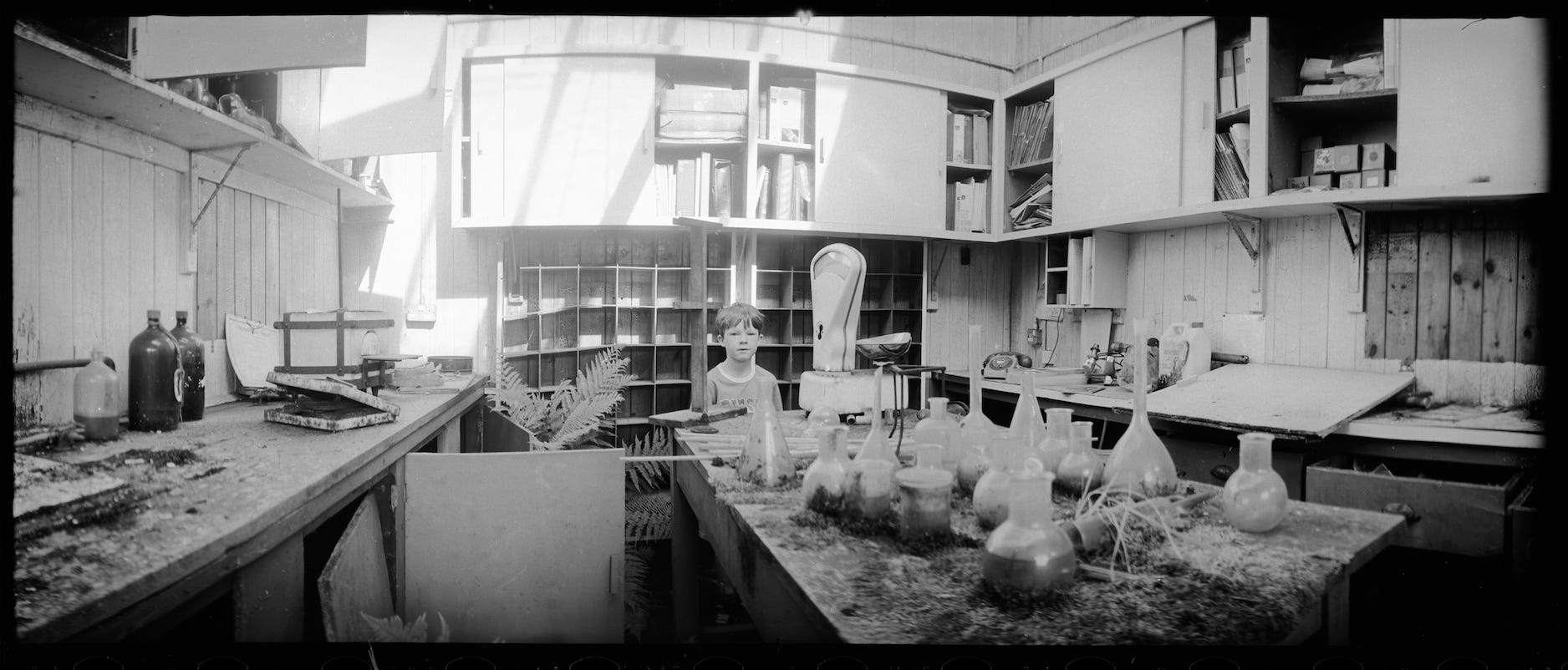
Will in the abandoned lab.
A few tips about photographing your family;
Don’t be too controlling, keep it fun and let them lead you into a situation where a great picture will happen. Avoid on camera flash whenever possible, it is the worst kind of lighting and has no mood. Don’t do long shoots. Children have a totally different experience of time and will experience them as interminable. Shoot for five minutes and then move away, have another go when something has changed.
Film tips, if you choose to go down that route;
Try to use medium format, it is a magical way to shoot and is worth the extra effort. You can’t help getting great shots from 6x6 or 6x7 negatives. Decide which areas are important for sharpness, focus once on the important part, – usually the eyes, -and then don’t move it! – instead, mimic the movement of the child. If (s)he moves back a bit, you move forward a bit, keeping the same part sharp. This way, you don’t miss a shot by turning the focus ring the wrong way at the critical moment.
Shoot the ordinary and everyday, - one day it won’t be.
Make it fun, if you boss them about you won’t get relaxed pictures.
Photograph the boring stuff as well as the main events.
Have a camera to hand at all times.
If you find my articles interesting or useful, please spread the word to anyone you can think of who would be interested.
If you have enjoyed this post and the information here and elsewhere on my Substack and you would like to support me, you can subscribe or just buy me a coffee at Ko-fi.com/andrewsandersonphotography You can send as little as £3.00, or more if you are feeling generous. This money goes towards materials used for the tests and printing for these articles. Alternatively you can be a paid subscriber.
Thank you for reading, please let me know your thoughts.
Andrew Sanderson June 2025.
Good evening Andrew,
Thank you for yet another simple but to the point post. I cant agree more with your take. I am more nuanced as I gave up en route 6×7 medium format for small format for convenience. main point is to have the prints done. the points you raise echo a pet topic of mine which I wrote about on one of my so irregular posts.
well, I wanted to say I enjoy your posts a lot, and have not managed to respond really so far. So it is on this post of yours just because I could today.
I can only say that thank goodness I had been photographing the family and printing (9.5×12 mostly, before moving recently to 8×10) . I could do this one 19 years apart (2yo vs 21yo)
“When they are older and arguing about my estate, they may attach more importance to them.” I don’t know about the first clause in this sentence but the second is undoubtable.