Drawing on Photographs 1.
An interesting combination of art and photography.

It’s funny to me how the self imposed pressure to come up with ideas, techniques and images for this Substack, has brought me full circle back to many of my early experiments and explorations in photography.
This week I am writing about a simple technique that actually began before I ever thought about being a photographer. As a kid, I used to draw and paint a bit and doodling was a great way to kill boredom. Apart from surreal scribbles (I still have many of these), I used to draw over photographs in my dad’s newspaper and the music papers we bought (Sounds, NME). Newspapers were in black and white in those days. I didn’t think I had saved any of these, but I found one in an old scrapbook:
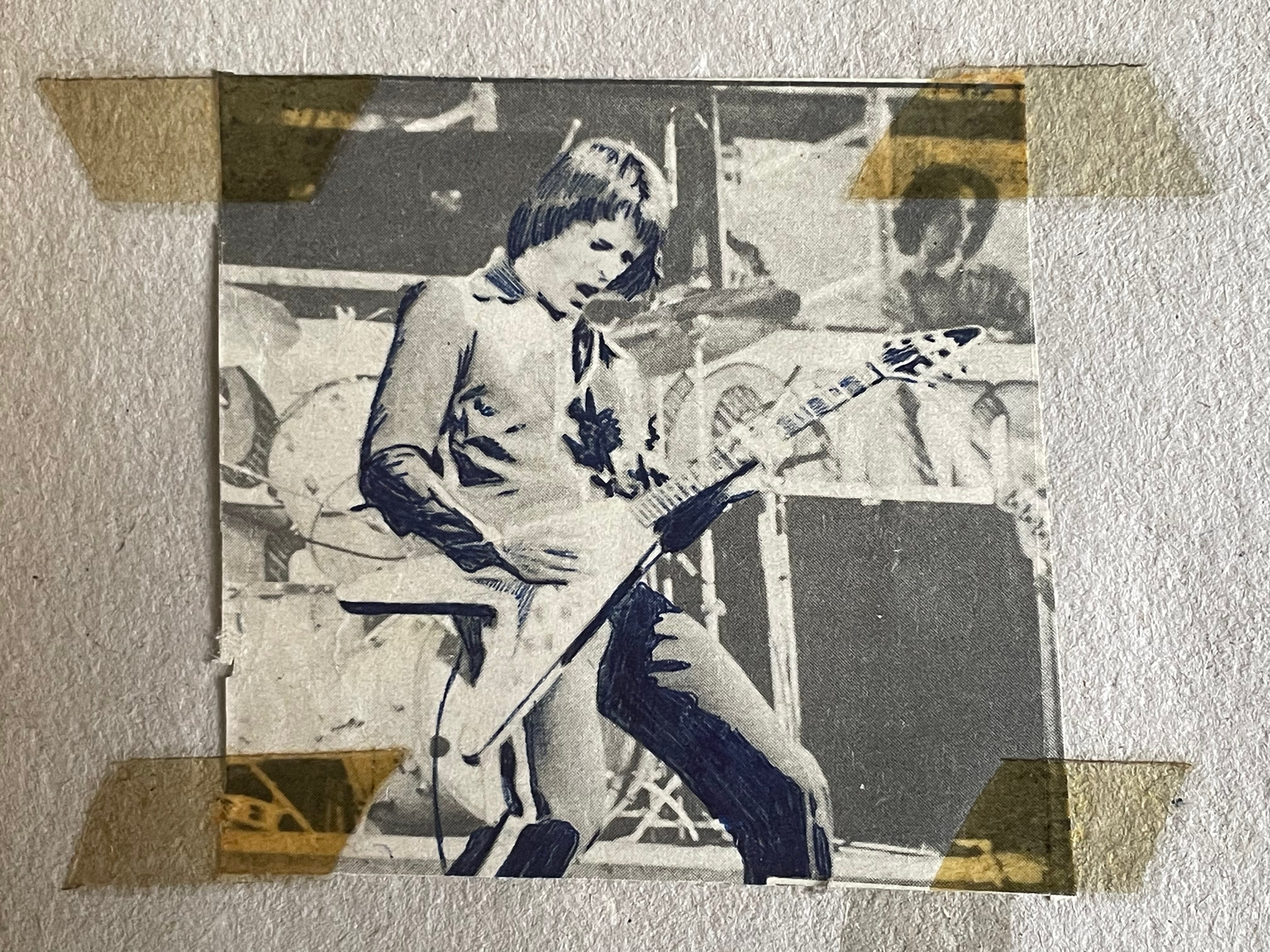
This was an exercise in thinking about shadows, tones and shading.
Later, when I was regularly printing my own work, I tried out a couple of ideas that would combine my two interests: drawing and photography. The first of these was simply to set the enlarger up to make a 10x8 inch print, but to mask off about two thirds of the image and just print a small portion.
When the print was developed, washed and dried, I would place it back in the easel and turn the enlarger on again. The rest of the image was then projected onto the white of the paper and I simply traced out the important parts of the image on the white areas. This can be done with a fine line pen on glossy papers, but matt papers allow the use of pencils which can look very nice.
How far you take this tracing stage is completely up to you. The rest of the drawing can be done by eye later with a full print as reference, or you can draw out everything you can see under the enlarger.
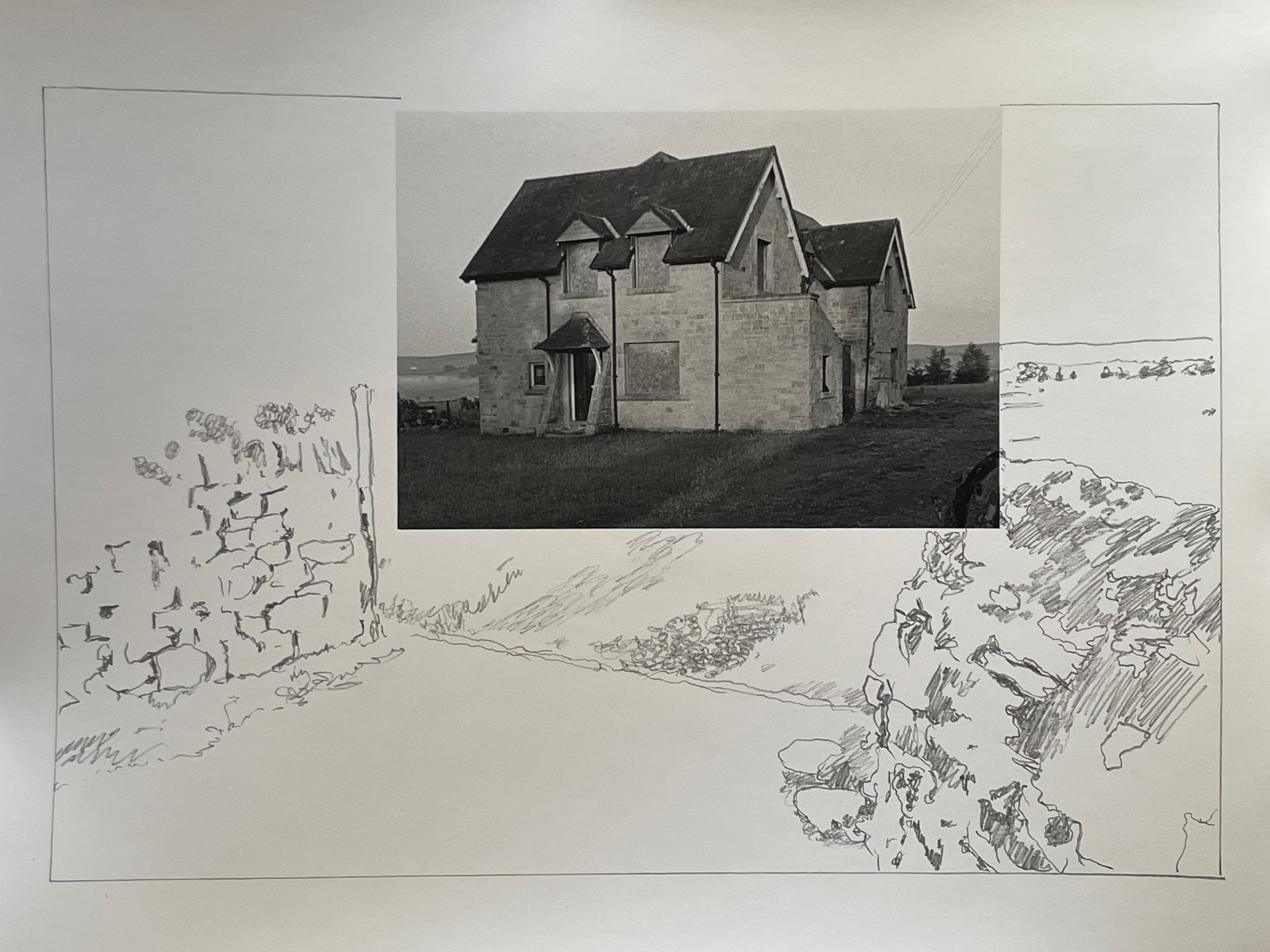
The final result is an interesting combination of photography and drawing which will intrigue your friends.
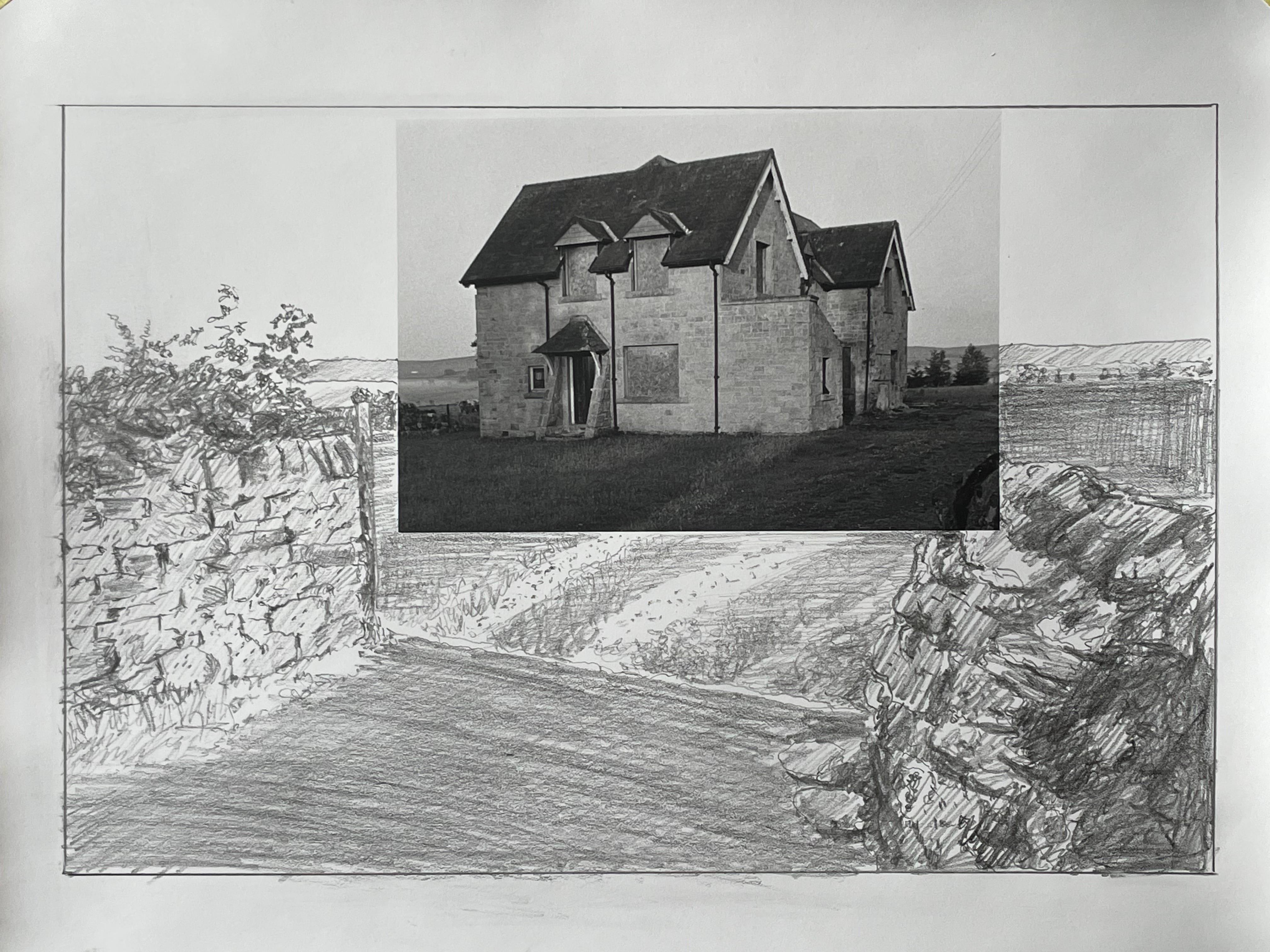
I know I have some of my early examples in my studio, but I haven’t been able to locate them. My old drawn/photographs were on Kentmere Art Document paper which had a textured surface similar to quality drawing paper. The examples here were done on Ilford Multigrade Fibre Based Matt.
Ilford also make the wonderful Art 300 Fibre Based paper which would be ideal for this. It also takes dyes, coloured pencils and paint as well.
Let me know if you try this technique out.
Next week I have Drawing on Photographs 2, with a different technique.
All of these words come out of my head. I never use AI in any form and I never will. I hope you appreciate the time and effort that goes into these articles. Let’s keep real photography and real writing alive.
If you find my articles interesting or useful, please spread the word to anyone you can think of who would be interested.
If you have enjoyed this post and the information here and elsewhere on my Substack and you would like to support me, you can subscribe or just buy me a coffee at Ko-fi.com/andrewsandersonphotography You can send as little as £5.00, or more if you are feeling generous. This money goes towards materials used for the tests and printing for these articles. Alternatively you can be a paid subscriber.
Thank you for reading, please let me know your thoughts.
Andrew Sanderson July 2026.
Other places to see my work;
Instagram; http://instagram.com/andrewsandersonphotography
Original hand made darkroom prints are available from my online shop; www.andrewsandersonphotography.bigcartel.com
I also offer one to one workshops at my darkroom/studio in West Yorkshire, UK. If you are interested please email me at sandyjottings@icloud.com
I appreciate the cross process branching out. I've messed with taking digital layers taken from my travels and using them to "draw" onto the scans of my film photos. I loved the process, the results no so much. I can't draw like you.
How cool is that?!